
Technical Deep Dive · Architectural Metal Insights
A stainless steel food-service counter is more than a sheet wrapped over a cabinet. In a hotel breakfast line, restaurant open kitchen, café servery or show kitchen, the worktop, fascia, backsplash, equipment cut-outs and service panels face different loads and cleaning routines.
The practical question is whether the complete package has a clear food-contact boundary, an appropriate finish, cleanable joints, controlled welds, accessible services and evidence matched to the exact material and process. This guide brings those decisions together and shows where Xinmao Metal’s architectural-metal coordination can add value around cladding, trims, reveals and interfaces without presenting a decorative metal supplier as a food-safety certifier.
Specification lens: separate the direct-contact surface from the decorative architectural metal, then approve the real corner, weld sequence, cleaning method and service access before production.
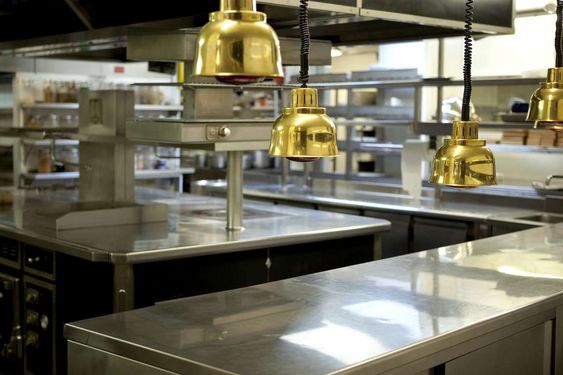
Hygiene is a system decision, not a grade label
Stainless steel is widely used in food and beverage environments because it combines corrosion resistance, durability, workability and cleanability. worldstainless identifies hygiene, cleanability, neutral taste and service life as important reasons. Those properties do not make every assembly automatically compliant for direct food contact.
The August 2026 Nickel Institute interview with 3-A SSI adds that composition, cast grade, finish, weld execution and the removal of harborage points all matter. The visible metal and hidden construction therefore belong in the same review.
1. Draw the direct-contact boundary first
Mark surfaces that touch food, receive splash or steam, or are decorative. A worktop may need a different declaration from a fascia, side return or wall cladding. Equipment cut-outs, trays, seals and transitions need the same clarity.
Name the substrate, finish or treatment, intended contact, cleaning regime and required evidence. “Food grade” is incomplete if it does not identify the grade, process, use condition and declaration behind it. BSSA’s food-processing guidance discusses 304, 316 and 430 in different conditions, supporting an application decision rather than an automatic 304 or 316 rule.
INOX-COLOR’s July 2026 notice reports an ISEGA reassessment for its INOX-SPECTRAL coloured sheets, registration 67471 U 26, for warm and cold food service and direct contact under the cited framework. That evidence belongs to the named process and use; it does not cover every coloured, painted or PVD-coated stainless surface.
2. Treat the finish as part of the cleaning plan
Finish selection should answer two questions: how will the surface look under project lighting, and how will staff clean and inspect it after repeated use? Reflective finishes reveal marks; brushing makes scratches read along the grain; texture changes how residue and cleaning tools meet the surface.
There is no single best finish. The choice depends on contact boundary, soil type, cleaning method, visibility expectations and supplier evidence. Outokumpu’s commercial-kitchen guidance connects work surfaces and wall cladding with cleanability, durability and a range of polished, brushed and patterned finishes. That does not mean all treated products behave alike.
mirrorINOX’s food-industry overview distinguishes polished, brushed, mirror-polished, patterned and treated surfaces for particular applications. Approve a representative sample under the real lighting and clean it using the proposed method. A small colour chip cannot show a welded corner, long grain or service opening.

3. Make joints, corners and access visible in the brief
Food residue and cleaning water collect at open gaps, poorly sealed transitions, ledges, rough welds, unsealed penetrations and unreachable areas. Show the section through the worktop, front edge, backsplash, adjacent wall, equipment insert and service void.
Reduce unnecessary breaks where the design and fabrication method allow it. Confirm corner treatment and drainage or wipe-down direction. If access panels or removable parts are needed, show removal, seal inspection and finish protection. A serviceable detail is better than a closed cavity that cannot be checked.
The architectural face may serve a different purpose from the food-contact worktop. A coloured front, brushed return or decorative screen can support the interior concept while the contact surface follows the hygiene brief. Draw and label the boundary instead of leaving it to workshop interpretation.

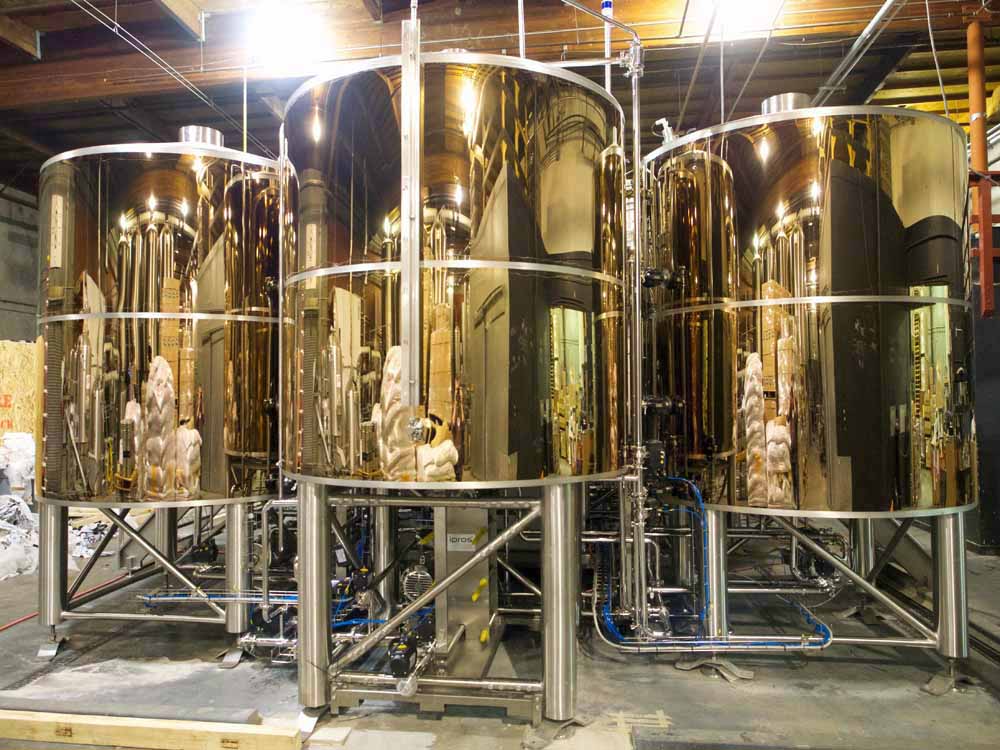
4. Control welding, contamination and handover
Visible stainless steel can fail before opening if it is scratched, contaminated with carbon-steel debris or finished inconsistently after welding. Identify stainless-only handling and abrasives, weld cleaning, finish blending, transport protection and the inspection point before installation. Include protection from other trades and removal of films or adhesives.
ASSDA’s March 2026 Project Horizon case records standards-based welding, matched bead-blasted finishes, pickling and passivation for a food-manufacturing project. It is not a universal counter specification; it shows why a documented fabrication and QA sequence is useful.
Cleaning instructions belong in handover. BSSA’s food-processing guidance explains that cleaning and disinfection depend on the process and warns that hypochlorites and other chloride-containing agents can create pitting risk. Agree the method, dilution, contact time, rinse requirement and approved tools for the actual finish.

Where food-service counters meet architectural interiors
The same logic applies across hotel breakfast counters, restaurant pass areas, café bars, banqueting stations, cafeteria serving lines and open kitchens. One visible object may contain a worktop, equipment interfaces, front panel, returns, backsplash, service access and connections to floor, stone, glass or wall cladding.
JYF Metal’s counter reference shows how curved forms and reflective or brushed surfaces shape hospitality counters. That visual language can be used without assuming that every visible surface has the same food-contact duty. Draw the operational boundary first, then coordinate the finish around it.
Specification and fabrication considerations
| Decision | What to define | Evidence to request |
|---|---|---|
| Contact zone | Direct food contact, splash zone or decorative zone | Marked plan and section; applicable declaration or test basis |
| Material | Grade, product form, heat and corrosion exposure | Mill or material records and supplier selection rationale |
| Finish | Direction, texture, gloss, colour and cleaning expectation | Full-size sample, corner sample and cleaning trial |
| Joints | Welded seams, returns, seals, removable parts and drainage | Shop drawings with sections and access sequence |
| Fabrication | Handling, welding, post-weld treatment and protection | Method statement, inspection points and finish acceptance criteria |
| Handover | Cleaning tools, chemicals, dilution and maintenance frequency | Written cleaning and maintenance instruction for operators |
Do not let a generic equipment schedule hide interfaces. Review the counter against floor falls, wall build-up, electrical and plumbing openings, ventilation clearances, adjacent stone or tile, and the replacement path for equipment that may change during fit-out.
Coordinate the counter as an interior metal package
Xinmao Metal’s useful role here is coordinating architectural metal around the operational element. Its public bronze stainless steel wall cladding panel page and stainless steel screen collection show adjacent surfaces that may align with a counter front, return or feature wall. Its shop drawing and value-engineering service, 1:1 mock-up and prototyping service and site measurement and installation guidance support review of reveals, seams, grain direction, transitions and as-built conditions.
The boundary of that claim matters: Xinmao Metal is not presented as the issuer of a food-contact declaration or a commercial-kitchen equipment certifier. The kitchen or equipment team confirms the direct-contact requirement; the architectural-metal package is then coordinated around it.
What architects and contractors should ask
- Contact boundaryWhich surfaces touch food, and which are only decorative or exposed to splash?
- EvidenceDoes the stated material and finish evidence apply to the exact process, use and cleaning regime?
- BuildabilityCan the shop drawing show every corner, return, service opening, seal and removable part?
- Finish continuityWhat happens to the finish at welds, cut-outs, repairs and field adjustments?
- HandoverWill the operator receive a cleaning method that matches the selected surface?
These questions turn a material label into an accountable package and make finish approval, access, protection and handover visible before fabrication.
Conclusion
A reliable stainless steel food-service counter is a coordinated assembly. Grade selection matters, but so do the contact boundary, finish, joints, weld quality, contamination control, cleaning method and future access. Verify the exact use, approve the real detail and keep decorative architectural metal distinct from food-contact proof.
FAQ
Is all stainless steel automatically food-safe?
No. Food-contact suitability depends on the exact grade, surface treatment, fabrication quality, intended use and applicable declaration or standard. “Food grade” is not project evidence.
Does every counter need 304 or 316 stainless steel?
No automatic grade rule applies. Consider the food, cleaning chemicals, exposure, temperature, forming and welding requirements, then document the selection.
Can coloured stainless steel be used in a direct-contact area?
Only when the named colouring process and intended use have suitable evidence. INOX-COLOR’s 2026 notice is specific to its INOX-SPECTRAL sheets in warm and cold food service; it does not cover other coloured, painted or PVD surfaces.
What should be approved before fabrication?
Approve the marked contact boundary, material records, full-size finish sample, representative corner or welded joint, service-access sequence, cleaning method and handover requirements. Review wall-cladding or screen interfaces at the same time.