
01
BASE MATERIAL
Material & Initial Surface
Select the stainless steel grade and starting surface around the application, fabrication route and service environment.
ARCHITECTURAL STAINLESS STEEL FINISHES
From mirror-bright reflections to refined matte textures and PVD colour, Xinmao Metal develops stainless steel finishes around the visual intent, application and service environment of each project.
304 / 316 / 316L · PVD Colour · Custom Texture · Finish Sample Approval
FINISH SYSTEM
Each stage inherits the surface condition of the previous stage. Base material, mechanical finish, formed texture, PVD colour and final protection should therefore be coordinated as one system.
BASE MATERIAL
Select the stainless steel grade and starting surface around the application, fabrication route and service environment.
MECHANICAL FINISH
Define reflection, roughness, grain direction and tactile character through the selected mechanical finish.
FORMED TEXTURE
Coordinate pattern scale, forming depth, effective size, reverse-side condition and panel support before colour treatment.
PVD COLOUR LAYER
Apply metallic colour over the approved base finish. Colour, gloss and depth remain dependent on the substrate and process sequence.
FINAL PROTECTION
Review anti-fingerprint treatment, protective film, handling and maintenance requirements against the final approved sample.
CORE FINISHES

01
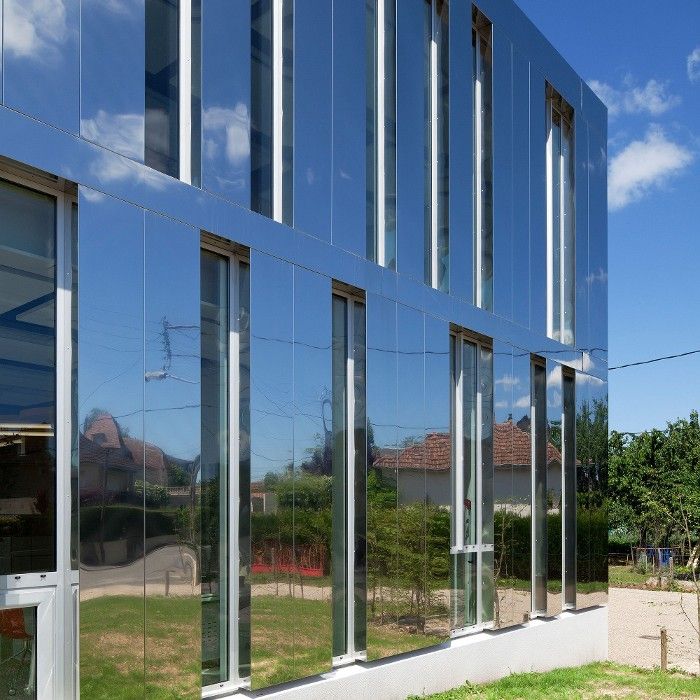
A highly polished surface where reflection becomes part of the architecture. 8K is a commercial finish name rather than one universal gloss standard, so the visible result should be approved by sample.
SPECIFY & CONTROLReflection clarity · Surface waviness · Protection film
BEST FORFeature Walls · Ceilings · Columns · Lobby Metalwork

02
A controlled directional grain suited to large architectural surfaces and detailed metalwork. Grain orientation should be defined on shop drawings and maintained across adjacent panels.
SPECIFY & CONTROLGrain direction · Batch consistency · Weld restoration
BEST FORElevators · Screens · Wall Cladding · Trims

03
A finer, softer mechanical finish with restrained glare and balanced diffuse reflection. Roughness, gloss and the approved visual sample should be reviewed together.
SPECIFY & CONTROLRoughness · Gloss · Cleaning requirement
BEST FORWall Panels · Elevators · Ceilings · Commercial Interiors
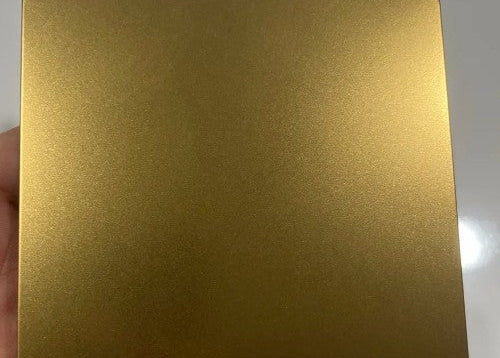
04
A matte surface created by controlled abrasive impact. Abrasive type, particle size and processing consistency influence appearance, cleanability and contamination risk.
SPECIFY & CONTROLAbrasive type · Uniformity · Contamination control
BEST FORArchitectural Panels · Feature Surfaces · Lobby Metalwork
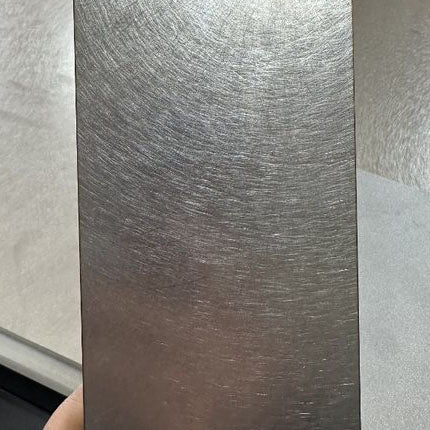
05
An overlapping non-directional texture with softer, more complex reflection than linear brushing. Pattern density and repeatability should be controlled across the production batch.
SPECIFY & CONTROLPattern density · Repeatability · Panel distortion
BEST FORElevators · Columns · Wall Panels · High-Visibility Interiors

06
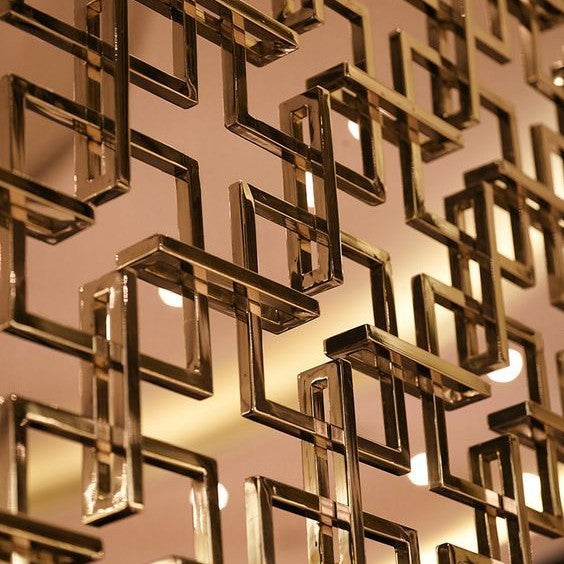
PVD adds metallic colour while retaining the character and imperfections of the selected base finish. Cutting, welding and major forming should normally be completed before final colour treatment.
SPECIFY & CONTROLBase finish · Colour reference · Fabrication sequence
BEST FORHospitality · Retail · Elevator · Screens · Feature Metalwork
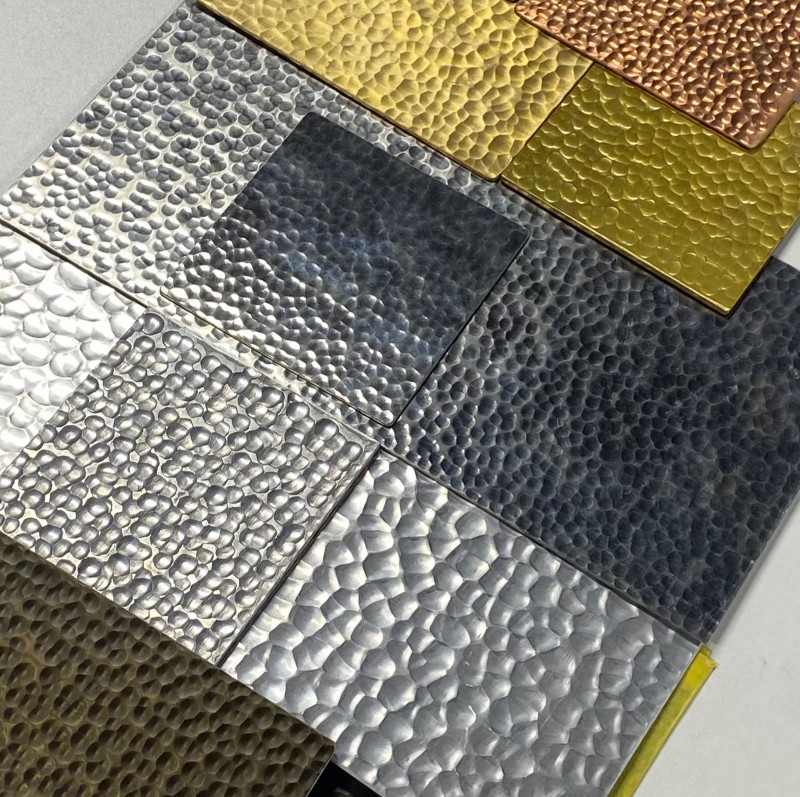
07
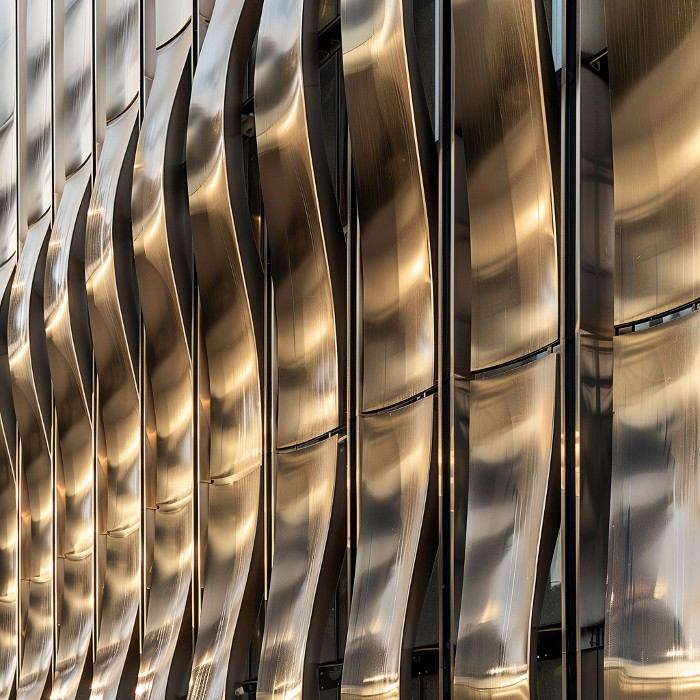
Dimensional textures introduce tactile depth and changing light. Pattern scale, forming depth, effective dimensions and the reverse-side condition should be coordinated with fabrication and fixing.
SPECIFY & CONTROLPattern depth · Effective size · Reverse-side condition
BEST FORFeature Walls · Elevator Panels · Counters · Decorative Cladding

08
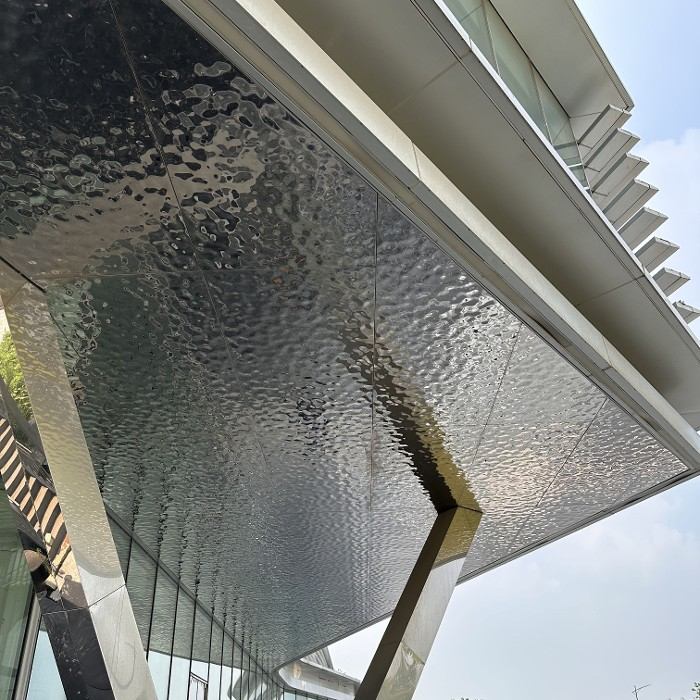
A formed reflective surface that turns light into changing highlights. Ripple scale, panel support, lighting position and the sequence of forming and PVD can materially change the installed result.
SPECIFY & CONTROLRipple scale · Forming depth · Support and lighting
BEST FORCeilings · Feature Walls · Hospitality · Retail Interiors
PVD COLOUR LIBRARY
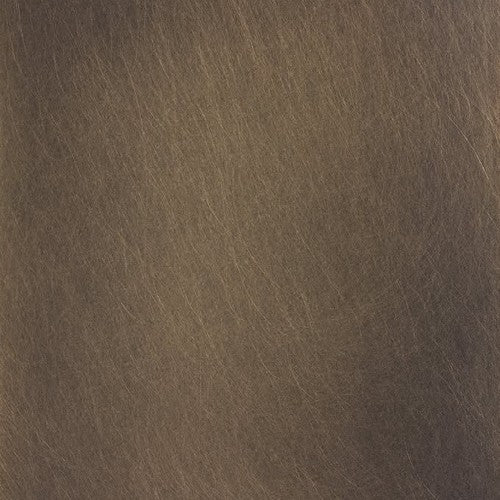
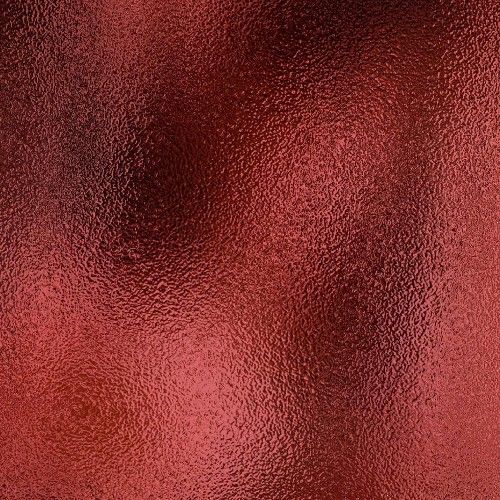
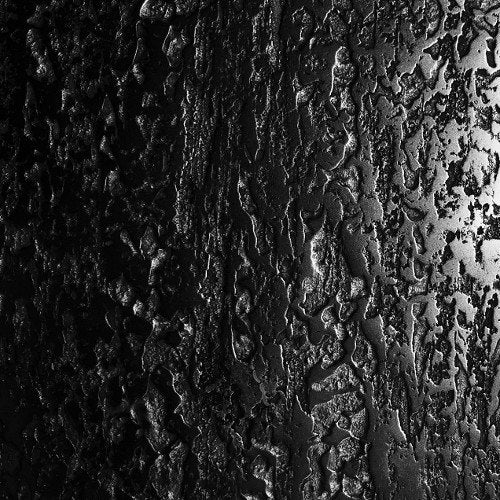
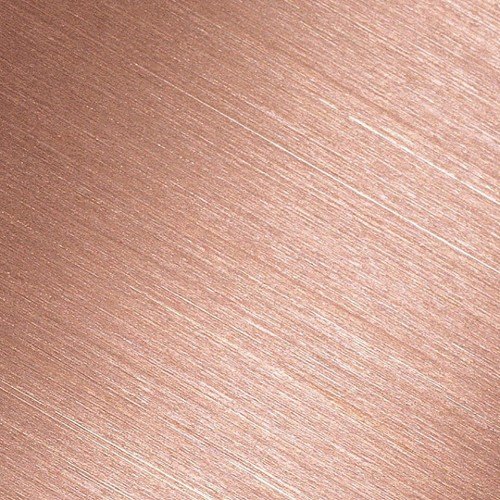
The same PVD colour can appear very different over mirror, hairline, satin or textured stainless steel. Select colour, base finish, gloss and fabrication sequence together, then approve the result against a physical sample.




FINISH + FABRICATION
Architectural finish quality is affected by every operation that comes before it. Geometry, joining, surface restoration and colour treatment should be reviewed as one production route.
01 / CUT & FORM
Coordinate cutting, openings, folding and major forming before the final decorative finish is approved.
02 / JOIN & RESTORE
Visible welding requires a defined grinding, cleaning and finish-restoration route using the approved grain direction and reference sample.
03 / COLOUR LAST
PVD surfaces are difficult to repair invisibly after cutting, welding or heavy forming. Final colour treatment should follow the confirmed fabrication route.
04 / INSTALLED VIEW
Mirror and high-gloss finishes amplify panel waviness, fixing marks and weld-through. Reinforcement, support and installation alignment form part of the finish result.
ARCHITECTURAL APPLICATIONS
Finish selection should respond to more than colour. Reflection, touch frequency, lighting, panel geometry, maintenance and environmental exposure all influence the final specification.
Review colour and reflection under the intended decorative lighting. Large mirror or PVD panels may require a full-size mock-up to assess joints and adjacent materials.
PVD · Mirror · Satin · Textured
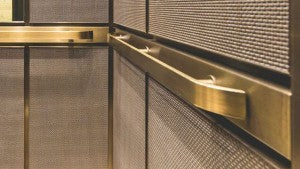
Prioritise controlled reflection, grain direction, cleaning resistance and replaceability. Confirm anti-fingerprint treatment on the selected base finish.
Hairline · Satin · Vibration · AFP
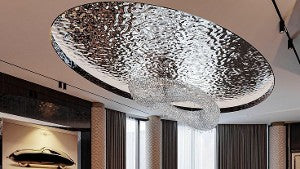
Panel support, viewing distance and lighting position can significantly change the appearance of mirror, embossed and water-ripple finishes.
Mirror · Water Ripple · Embossed
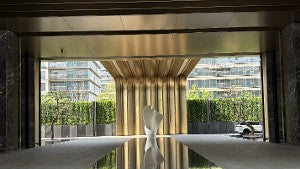
Review grade, surface roughness, drainage, rain washing, salt exposure and maintenance access as one exterior finish strategy.
Project-specific finish + material/environment review
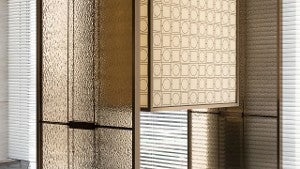
Confirm cutting, folding, welding and edge finishing before PVD. Approval samples should include representative openings, corners and joints.
Hairline · Mirror · Satin · PVD
INPUT
Review the application, drawings, project environment, lighting, adjacent materials and maintenance expectations.
OUTPUTMaterial and finish direction
DEFINE
Coordinate grade, initial surface, grain direction, colour, gloss, texture, protective treatment and fabrication sequence.
OUTPUTProposed finish specification
APPROVE
Review colour, grain, gloss, texture scale and visible limits under representative lighting and viewing conditions.
OUTPUTSigned master sample / mock-up
CONTROL
Control material identity, batch reference, panel orientation, in-process comparison, final inspection and protective packing.
OUTPUTProduction consistency record
A project finish specification should define more than a colour name. These fields coordinate material identity, visual acceptance, fabrication compatibility and production control without treating commercial finish names as universal standards.
FINISH QUESTIONS
304 is widely used for architectural interiors, while 316/316L is typically considered for coastal, humid or more corrosive environments. Final material selection should be reviewed together with the finish and project exposure.
Yes. PVD colour can be applied over different base surface directions such as mirror, hairline or satin, producing different levels of reflection and visual depth.
Digital images are useful for initial selection, but final colour, gloss and texture should be confirmed using a physical finish sample under representative project lighting.
Yes. Anti-fingerprint treatment can be reviewed for high-touch architectural applications and selected finish combinations.
Yes. Send the intended finish direction, physical reference where available, application and project drawings. Feasibility and the final surface standard can then be confirmed through sampling before production.
8K or No.8 is a widely used commercial description, but it does not define one universal gloss or reflection quality. Architectural mirror finishes should be approved against a physical reference and reviewed for reflection clarity, polishing marks and panel waviness.
Normally, yes. Cutting, folding, welding and major forming should be coordinated before final PVD treatment because later grinding or welding removes or damages the coating and is difficult to repair invisibly.
Exterior suitability depends on the complete system: substrate grade, surface preparation, coating system, cut edges, drainage, salt exposure and maintenance. It should be reviewed against project-specific evidence rather than the colour name alone.
Confirm the base material, colour, gloss, grain direction, texture scale, viewing side, representative lighting and visible acceptance limits. Complex screens, folded panels or water-ripple surfaces may require a representative mock-up rather than a flat colour chip.