
FIELD REVIEW / COASTAL SURFACES
Tea staining on architectural stainless steel: diagnose the surface before choosing a remedy
Use exposure, surface condition and cleaning access to investigate a stain and specify the next installation.

A coastal building that needed a different maintenance approach
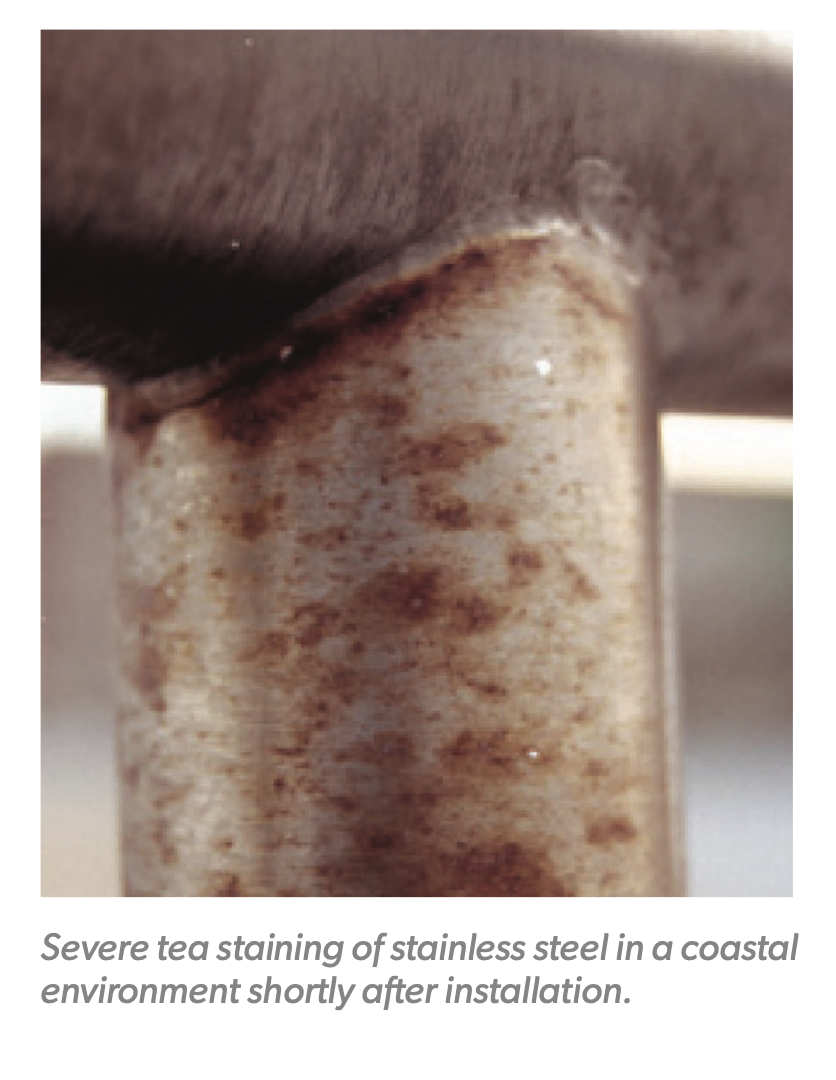
An IMOA case study of a Wellington building describes Type 316 stainless steel less than 100 metres from the bay. Its No. 4 surface had roughness just under 1 micrometre Ra. Staining was particularly evident in areas sheltered from rain, and the building later adopted quarterly cleaning. The report also identifies earlier problems with crevices and weld cleaning that were corrected.
This is a documented example, not a cleaning interval to copy into every coastal project. It shows why an alloy name alone cannot explain how an architectural surface will look in service. For a hotel entrance, exterior screen or column cover, the inspection should connect exposure, surface condition and access for cleaning before a remedy is selected.
First distinguish discoloration from deeper damage
ASSDA's tea-staining guidance describes tea staining as surface discoloration caused by corrosion. Its discussion concerns a cosmetic condition. Outokumpu's atmospheric-corrosion overview adds that severe or neglected conditions can involve localized attack and pitting. A brown mark should therefore be examined before it is dismissed as harmless.
Begin with a location record and close photographs. Note whether marks cluster beneath a canopy, along a joint, near a weld or where another trade worked. Compare a sheltered area with a rain-washed area of the same metalwork. Record the material and finish identification where available; appearance alone cannot verify a stainless steel grade.
This is an inspection framework rather than a remote diagnosis. Visible cavities, repeated staining after cleaning or concern about a load-bearing connection require assessment by the responsible specialist. Ask for findings that distinguish surface deposits, contamination and corrosion of the component. Preserve the original condition record before abrasive work removes useful evidence.
| Evidence to collect | Question it should resolve |
|---|---|
| Material and finish identification | What substrate and surface are actually installed? |
| Mapped staining locations | Do marks follow shelter, joints, welds or recent works? |
| Location-specific surface data | Does the assessed roughness describe the affected area? |
| Supplier-approved cleaning trial | Does the proposed treatment preserve the finish? |
Project inspection framework, not a remote diagnosis. Pitting or concern about a connection requires specialist assessment.
What the 0.5 micrometre figure means
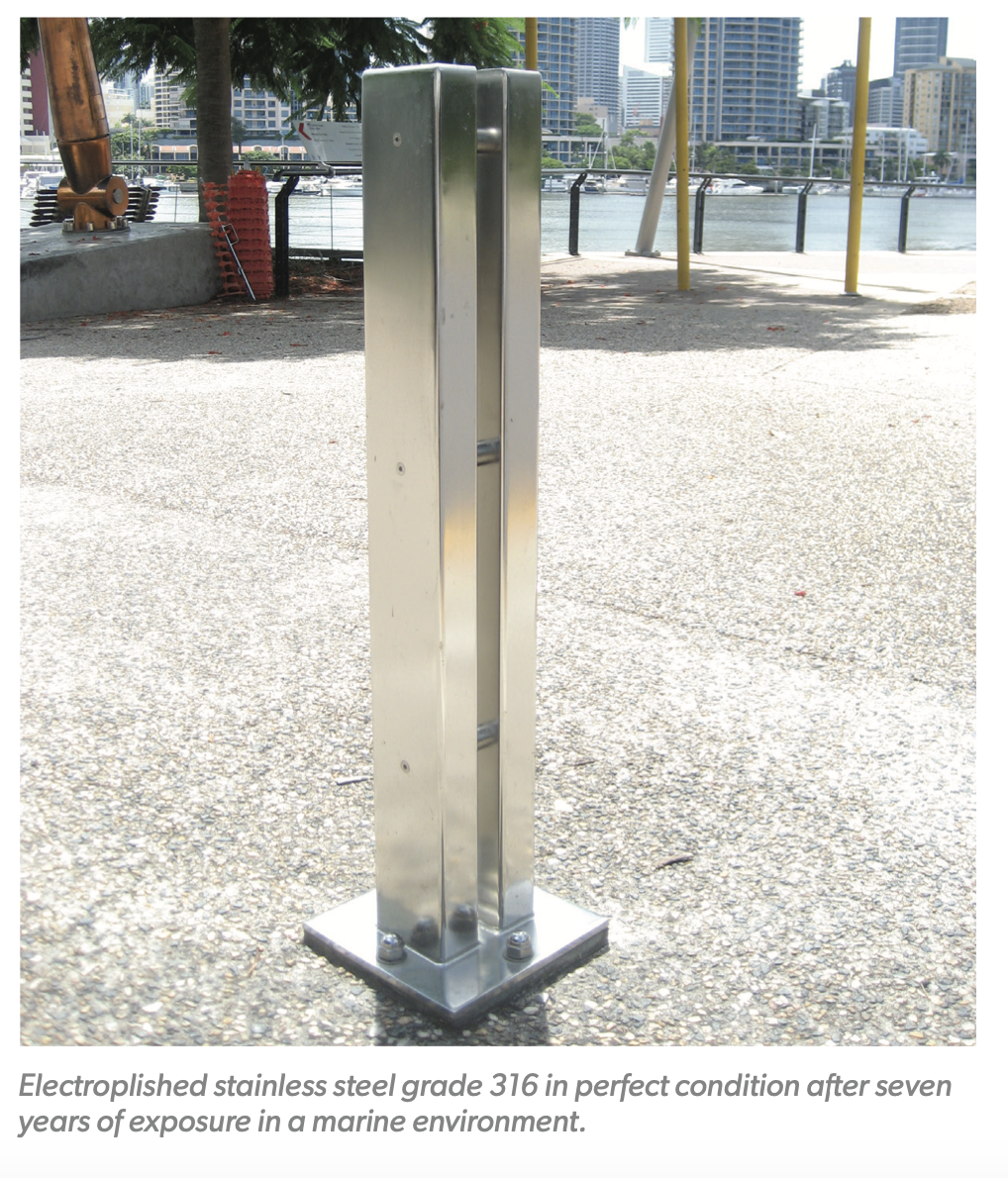
ASSDA strongly recommends Ra below 0.5 micrometres for reducing coastal tea-staining risk on relevant finished surfaces. It also states that a No. 4 designation is insufficient without a roughness requirement. That helps explain why two products sold under the same finish name can need different evaluations.
IMOA's exterior-selection guidance similarly treats a finish of Ra 0.5 micrometres or less as smooth in this context. It advises asking the supplier for roughness information and including the requirement in the specification. The figure is a useful specification reference; it does not guarantee freedom from staining.
For a new enquiry, request surface data for the offered product rather than copying a generic conversion from abrasive grit to roughness. For an existing installation, ask the assessor where and how any measurements were taken. A face, a repaired weld and a local scratch may present different conditions. Keep the results associated with those locations.
Visual approval is still needed. Roughness data cannot define the complete appearance of a brushed panel, and a finish sample cannot establish that an installed repair meets a measured requirement. Treat the two records as complementary evidence.
Map where water and contaminants remain
IMOA explains that sheltered or horizontal surfaces accumulate contaminants more readily and receive less effective rain washing. Its guidance favours vertical grain orientation for directional finishes to assist drainage. These observations give the inspection team specific features to look for: unwashed returns, upward-facing ledges and details that retain moisture.
Turn those observations into a project sketch. Show the cleaning route and areas where a worker can safely reach the full surface. A decorative screen may have a visible face that is easy to wipe and a rear face that is inaccessible. A soffit may receive atmospheric deposits while remaining protected from rain. Account for both sides of the assembly.
Where access is poor, compare a detail change with the maintenance effort it would require. The responsible designer can then assess drainage and interfaces alongside material selection. No universal distance from the sea can substitute for the actual exposure review, especially where local shelter, salt deposition and cleaning differ.

Review the grade without assuming that 316 solves every exposure

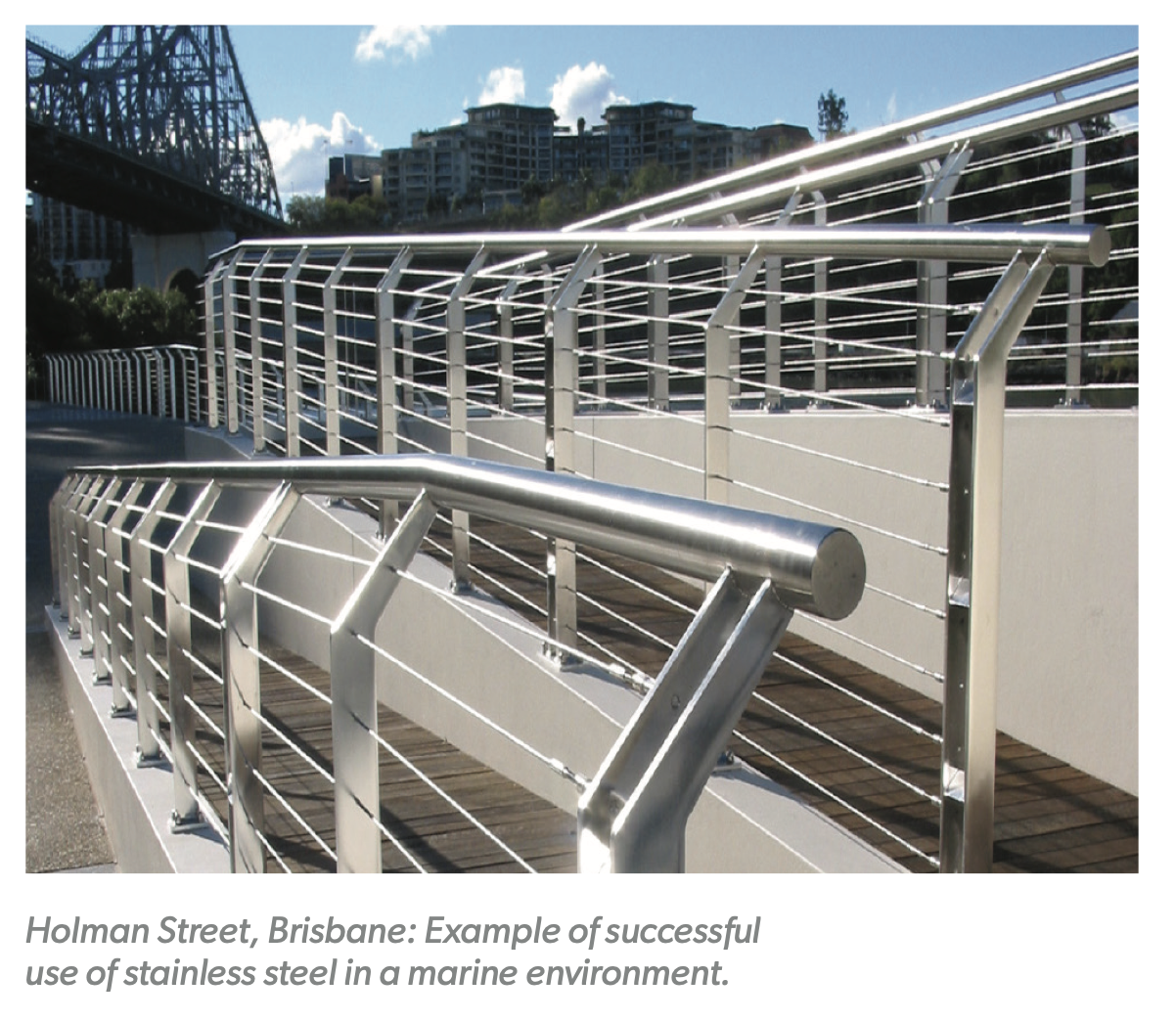
ASSDA recommends 316 or equivalent corrosion resistance for marine environments and notes that demanding conditions may require higher-alloyed grades. Its advice still calls for a smooth finish and maintenance. Outokumpu explains how chloride deposits and moisture can challenge the passive surface layer.
For a coastal hotel project, ask the material specialist to review the specific locations. A protected lobby panel, an exposed entrance return and a salt-affected external screen need an application-based decision. Do not silently replace the nominated alloy with another grade, and do not treat a decorative colour coating as proof that a lower-alloy substrate is suitable.
The procurement record should separate the substrate requirement from finish acceptance and maintenance responsibilities. This makes the basis of selection visible to the client and facilities team, including any locations that need closer inspection. If a coating is present, its supplier must confirm the compatible inspection and remedial methods.
Start cleaning with a finish-compatible trial
BSSA's cleaning guidance supports mild detergent and warm water for routine cleaning, followed by rinsing and drying. It warns against chloride-bearing cleaners, hydrochloric-acid mortar removers and carbon-steel cleaning media, and calls for testing treatments in an inconspicuous area. Its general stainless steel methods should not be assumed suitable for every decorative coating.
Ask the finish supplier to approve a trial method, then document the result before extending it across the installation. Check the cleaned area for a changed sheen or a new scratch pattern. If the staining remains, obtain a diagnosis and a specialist proposal instead of escalating automatically to stronger chemicals or heavier abrasion.
Restoration can alter appearance. Record the proposed treatment, how adjoining materials will be protected and how the repaired surface will be accepted. The scope should include any root cause that the assessment identifies. Repeating a local cleaning operation without addressing exposure or contamination may leave the same maintenance problem unresolved.
Make the maintenance plan part of the architectural specification
For Xinmao Metal quotations involving exposed architectural stainless steel, a useful brief includes the installation setting, finish reference and expected cleaning access. These inputs support discussion of the decorative components and their interfaces; they do not establish an unverified corrosion warranty or a supplier's maintenance performance.
Set the initial inspection programme with the facilities team and revise it from recorded site observations. Name the approved cleaning method and the circumstances that trigger specialist review. Keep material certificates, finish records and remedial approvals with the handover package, so that a later contractor understands what is installed.
Assign someone to keep that record current when cleaners, access arrangements or components change. The inspection team will then have the material and finish history available when a stain appears, together with the results of earlier treatments.
Technical sources
- IMOA: Wellington coastal building case study, ABC 14/09, 2009
- ASSDA: Tea staining and coastal-corrosion guidance
- IMOA: Which Stainless Steel Should Be Specified for Exterior Applications?
- BSSA: Cleaning methods for stainless steel
- Outokumpu: Stainless steel and atmospheric corrosion, 2025
The Wellington case study is from 2009. Its cleaning interval applies to the documented building; the site maintenance plan requires its own review.