

A museum display case is often drawn as a rectangle around an object. In the gallery, it does more. It sets the distance between a visitor and a fragile thing, decides how a curator reaches the object, and carries a small environment inside the larger room. The metal frame is therefore part of the architecture, even when it is quiet. Its glass, seals, base, support and opening sequence need to be considered together.
The Canadian Conservation Institute describes an enclosure as a structure that surrounds a volume for protection. Its guidance on airtightness explains how gaps can admit dust, pollutants and water vapour, and how carbon-dioxide tracer tests can reveal leakage. It also says that a tight case is not an automatic answer: the required condition depends on the object, the room and the materials placed inside. The useful brief is a measured one, not a promise attached to a sheet of metal.
Goppion’s WING case, designed with Norman Foster, is a useful scale study. The company describes it as a lectern case for notebooks, documents, prints and photographs. Units can stand alone, sit in rows, form islands or attach to a wall. That range changes the way an exhibition is planned. The case becomes a repeatable room element, and its proportions establish where the visitor pauses and how the next object is found.
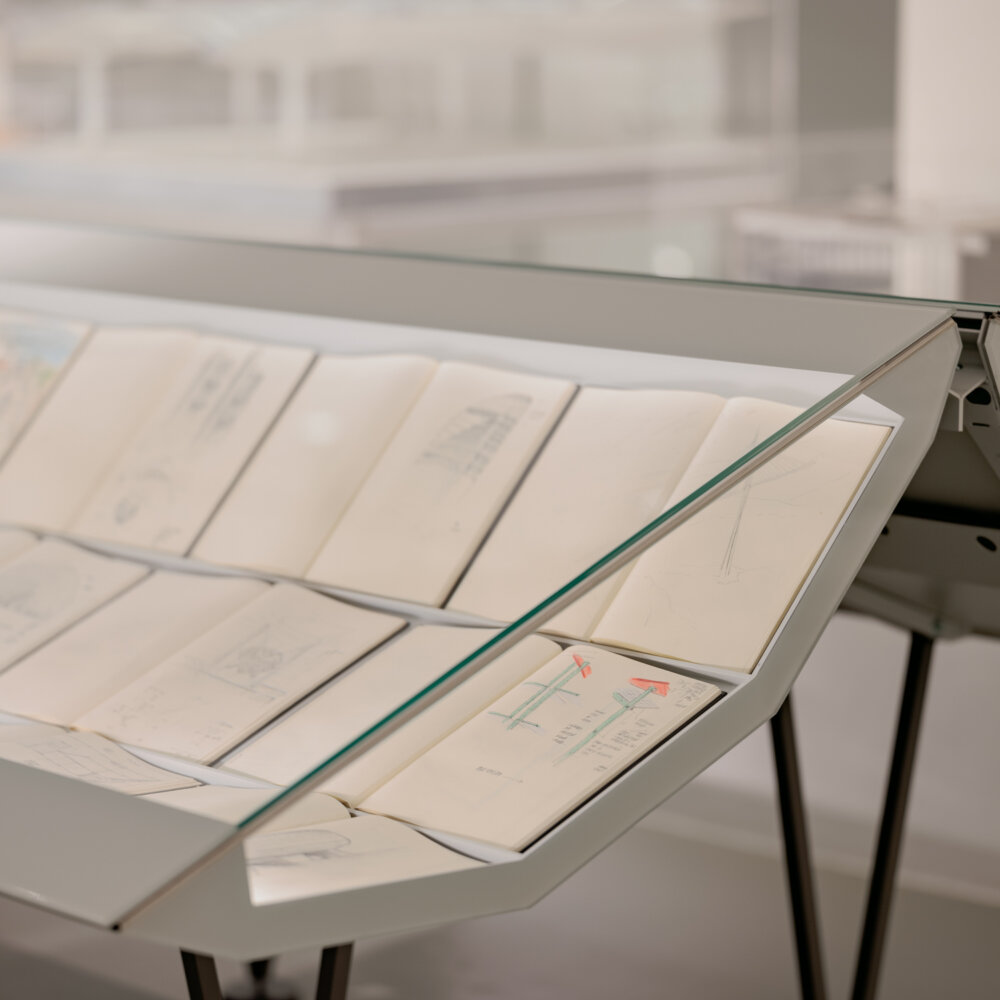
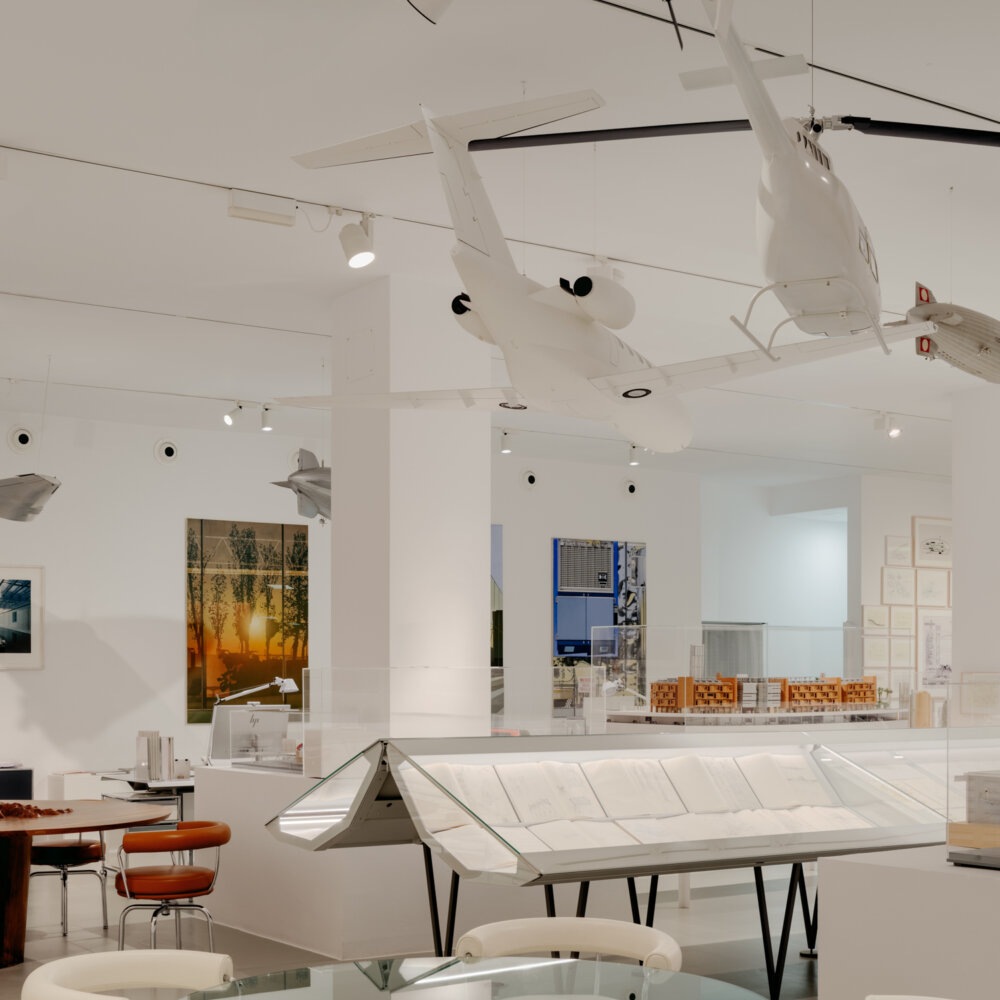
Glass is a wall with an opening sequence
The clear face of a case is usually the part visitors notice first. The opening is the part the project team has to rehearse. Goppion’s technical-innovation note records a problem with paint used inside a case to hide mechanical parts. The company describes pre-painted glass joined with a plastic layer instead, keeping the mechanism concealed without adding a painted material to the display volume. The detail is small, but it changes the material list inside the enclosure.


The same question grows when the case becomes long or tall. Goppion’s one-off record lists a 13-metre table case at the British Museum, a 64-square-metre case for the Ardabil carpet at the Victoria and Albert Museum, and a six-metre-high wall case. Those records are not a sizing rule. They show why door travel, lifting, gasket compression, floor loading and a safe object route must be drawn before the case is treated as a cabinet.


At the Pinakothek der Moderne in Munich, Goppion reports two long glass cabinets suspended by steel cables. The objects appear to float, yet the support is a real load path that needs a coordinated ceiling, anchor and installation method. A suspended case should be reviewed as a small hanging room, with access and rescue procedures included in the drawing set.

Give the base a job
The base can be a service compartment rather than a dead pedestal. CCI’s guidance on passive humidity control shows an object in the upper part of a case and sorbent in a lower compartment. A controlled opening lets the two volumes exchange air. The arrangement keeps the environmental material out of the visitor’s view while leaving it reachable to the museum team.
Glasbau Hahn’s project references give the idea a built scale. Its Qasr al Hosn Fort reference describes a table case with active climate equipment and a humidity-control device. At the National Palace Museum Southern Branch, the company records 19 wall cases up to 25 metres long and nine metres high. The numbers make the base, service doors and access route architectural questions. They also show why the case should be coordinated with the floor and the exhibition sequence, not placed after the gallery is finished.


The lower compartment still needs a clean route for loading sorbent, reading a monitor and replacing a gasket. Draw that route with the same care as the visitor’s line of sight. If the case is fixed to a floor or a plinth, mark where the fixings stop and where the object team can work without moving the whole unit.

Choose the interior palette by evidence
The materials inside a case can affect the object as much as the frame protects it. The Smithsonian Museum Conservation Institute notes that wood composites, adhesives and coatings can release formaldehyde and acids. A board that looks harmless in a shop can become a source of off-gassing when it is sealed beside paper, metal, textiles or pigments.
The specification should therefore list the metal, glass, gasket, tape, board, paint and object support as one enclosure palette. Ask for the material data and any required emissions or compatibility test. CCI recommends matching environmental control to the object’s vulnerability rather than tightening every case by default. That approach keeps the case proportionate: a simple, well-sealed enclosure may be right for one object, while another may need a monitored compartment and a different opening routine.
Glasbau Hahn’s references also show how the visual reading changes with the case type. Westminster Abbey’s Queen’s Diamond Jubilee Galleries contain 42 cases, while the Victoria and Albert Museum Europe Galleries reference concealed opening mechanisms. At both scales, the mechanism is part of the visitor’s experience even when it is hidden. The case should be judged from the normal viewing distance, then opened by the person who will actually handle the collection.


Release a case as a small building package
For Xinmao Metal, the relevant work is the translation from an approved exhibit idea to a coordinated metal package. Public pages for advanced shop drawing and value engineering and 1:1 mock-up and prototyping are useful process references. They do not establish museum-case certification, airtightness, conservation performance or previous project experience, so those claims do not belong in the brief.
The package should carry:
- the object envelope, viewing axis, sightline and required clearance;
- metal family, thickness, glass build-up, gasket and interior-board schedule;
- the opening direction, lift or slide path, locking method and safe handling zone;
- the base compartment, sorbent or monitoring access and service route;
- floor loading, support points, anchors and a plan for delivery into the gallery;
- material evidence for anything sealed inside the case, including required airing or testing;
- a full-scale sample with one corner, one opening, one support and the intended object support.

The case is a room at a very small scale. It has a wall, a controlled volume, a threshold, a service side and a public side. When those parts are tested together, the metal frame can stay quiet while the object receives the care and attention the gallery promises.
Specify the enclosure, not the cabinet: object, glass, frame, seal, base, opening route and test evidence should arrive in the same review.
Technical and project references
- Canadian Conservation Institute, Technical Bulletin 38: Airtightness Measurement of Display Cases and Other Enclosures.
- Canadian Conservation Institute, Technical Bulletin 33: Silica Gel: Passive Control of Relative Humidity.
- Smithsonian Museum Conservation Institute, 2126: off-gassing and exhibit materials.
- Goppion, The WING Case.
- Goppion, transparent wall with opaque screen technical innovation.
- Goppion Museum Reportage, Pinakothek der Moderne, Die Neue Sammlung.
- Goppion one-off display-case record, ArchDaily product catalogue.
- GR Technic / Glasbau Hahn project references.