
Metal Industry · Technical Deep Dive
Bronze cladding is often specified by colour, even though “bronze” can describe several copper alloys, a pre-patinated sheet, a copper-alloy skin bonded to a lightweight core, or a bronze-tone stainless surface. The choice changes forming, joining, movement, cleaning and replacement. This guide sets out a release method for alloy identity, weathering, joints and finish acceptance.
Treat bronze as a material schedule, not a colour chip
The Copper Development Association explains that true bronzes are primarily copper-tin alloys, while brasses are primarily copper-zinc alloys. Architectural practice also uses “bronze” for copper alloys that resemble bronze in natural or weathered colour. That history is useful, but it creates a specification trap. A purchase order that says “dark bronze cladding” leaves the alloy, thickness, temper, surface route, substrate, fasteners and ageing behaviour open.
Write the material designation and standard first. Then state the sheet or plate form, thickness, temper, visible finish, back-face treatment, joint method and sample reference. If the design only needs a bronze appearance, state that it is a bronze-tone stainless or coated product and keep that route separate from solid copper alloy. The two options have different forming, thermal, galvanic and maintenance decisions.

Decide how the surface will age
Colour is a process. CDA records that alloy, surface preparation, chemical solution, temperature, humidity, water chemistry and application method all influence a chemically coloured finish. Natural weathering also varies with exposure, sheltered zones, rain washing, pollution and adjacent materials. A sample that looks uniform in a workshop may not remain uniform on a long elevation.
The specification should state whether the surface is untreated and expected to weather, factory pre-patinated for a controlled handover tone, or chemically converted under a controlled recipe. It should also state acceptable variation, staining and runoff at the inspection distance.
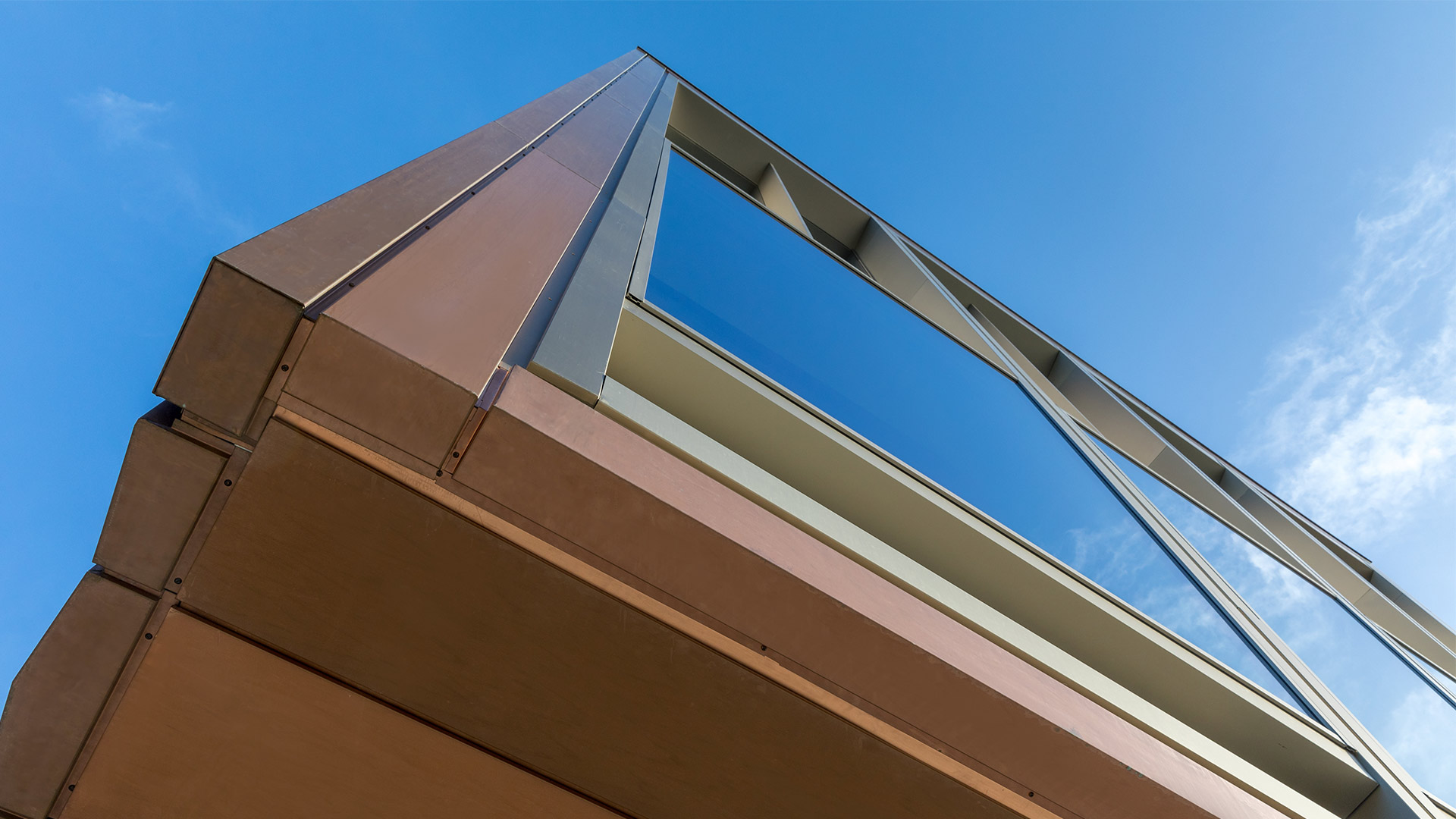
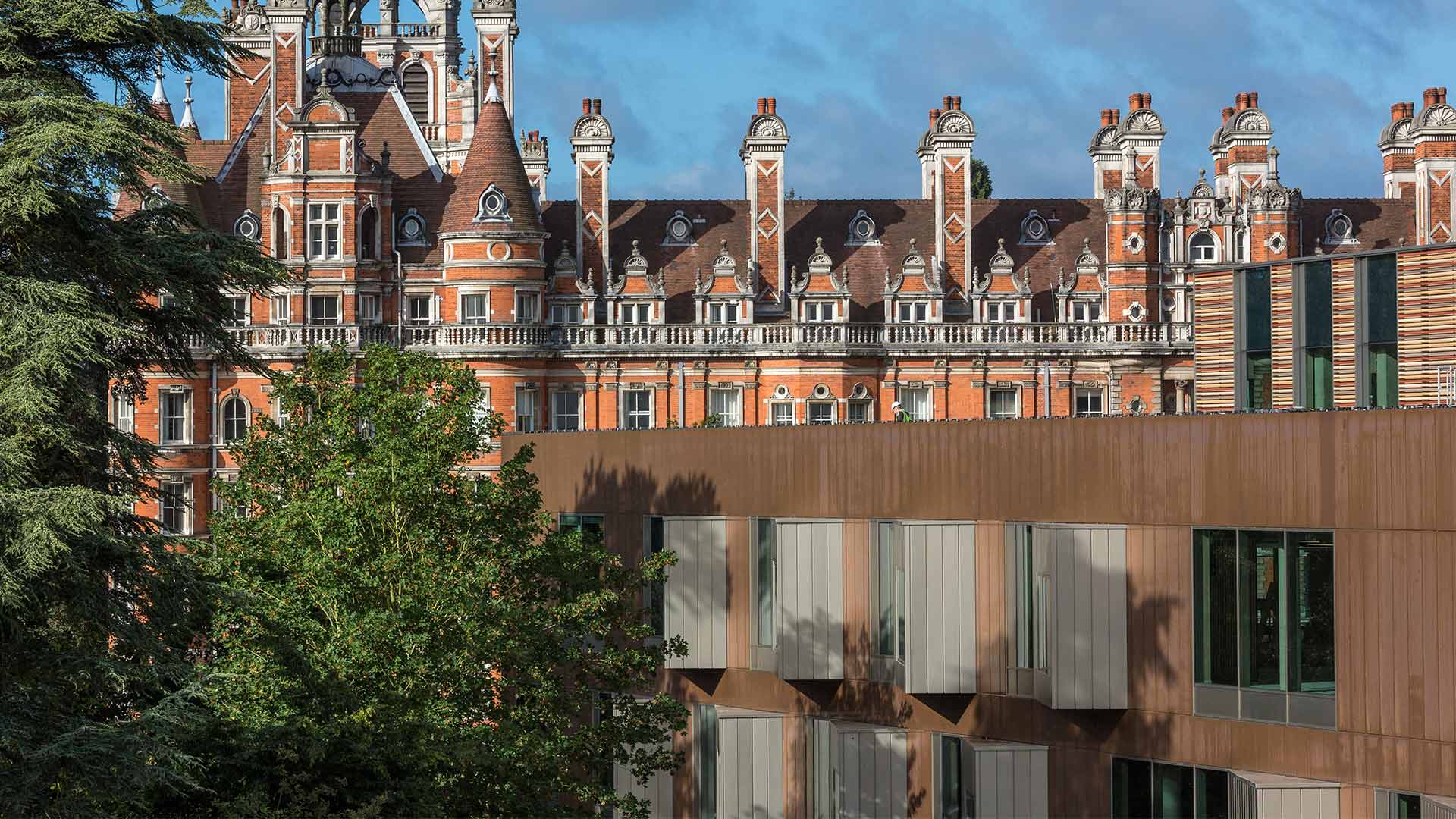
Proteus’s Royal Holloway case shows the difference between a project decision and a generic colour claim. TECU Bronze was selected for brown-red, brown-grey and ochre tones that related to brick and clay roofs. The installed material was a warm reddish-brown natural state expected to weather; pre-patinated material was also available as an alternative that bypasses the gradual weathering period.
Design joints for movement and water
CDA’s basic details call for galvanically compatible fasteners and cleats that allow movement. Its expansion-joint specification asks for shop drawings, movement provisions, watertight transitions, separation from incompatible materials and coordination with the substrate. Show fixed points, sliding points, slot directions, panel lengths, corner transitions, drainage paths, sealant geometry and access for replacement.
Exposed sealants belong in that design conversation. A current Metal Architecture feature describes seams, laps, penetrations and transitions as locations where sealants must accommodate movement while retaining adhesion and weather resistance. On a bronze facade, sealant colour, joint width, backing, primer and replacement route affect the visual field as well as water control.
Use compatible fasteners or a documented separation layer where bronze touches aluminium, carbon steel, galvanised steel, masonry salts or other dissimilar materials. Keep water from sitting at a concealed contact. If the panel is laminated to a core, detail the edge closure and the path for any water that reaches the joint; the exposed bronze face does not replace the rainscreen drainage plane.
Select a fabrication route that matches the finish
CDA lists bending, brake forming, hydroforming, casting and other methods for copper alloys. Mechanical fasteners are common and removable. Adhesive bonding can create a composite panel when surface preparation, adhesive selection and edge design are controlled. Soldering and brazing can be useful where watertightness is required, but filler metals may not match a visible bronze surface. CDA notes that welding is less common across copper alloys because of distortion and colour matching; silicon bronze is the copper alloy most readily welded.
A bronze cladding package should include a first-piece corner, return or seam made with the specified alloy and finish. The sample should prove bend radius, edge closure, hole/slot treatment, fastener colour, sealant, back-face protection and repair method. If the visible face is patinated, inspect the formed edge and any post-fabrication touch-up rather than approving a flat sheet only.
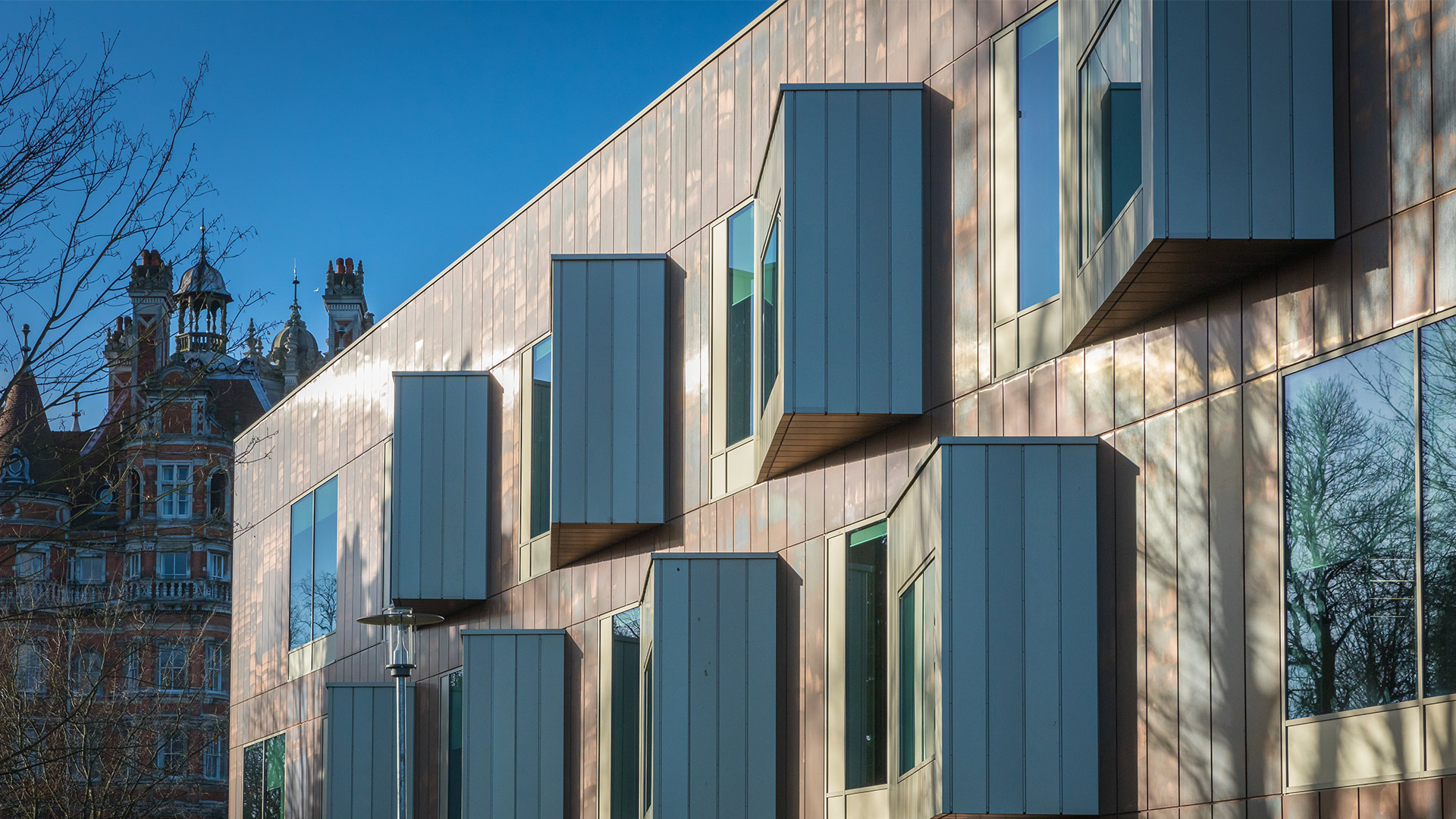
Proteus’s case documents thin TECU Bronze skins structurally bonded to an aluminium honeycomb core for rigidity and an optically flat face, with elongated portrait-format panels and horizontal joints coordinated with projecting meeting pods. That is case-specific evidence; it should not be copied without checking the selected material, fire strategy, adhesive, support, wind load and edge detail.
Proteus’s Bristol Performing Arts Centre case uses TECU Brass and TECU Bronze on a lightweight honeycomb-backed rainscreen with elongated vertical panels. Its reported brown, green and brown-violet shifts under changing light and seasons are a useful reminder that a finish sample needs a viewing-distance rule and an agreed variation band.


Use an acceptance table before fabrication
| Risk | Define in the package | Evidence to approve |
|---|---|---|
| Wrong alloy or finish route | Alloy/standard, thickness, temper, natural or pre-patina, back-face treatment | Mill documentation, finish sample and approved material schedule |
| Uneven patina or staining | Exposure zones, acceptable variation, runoff path, adjacent-material protection | Full-size sample under project lighting and cleaning/repair method |
| Buckling or joint failure | Panel length, fixed/sliding points, movement allowance, sealant geometry | Shop drawings, movement calculation and first-piece inspection |
| Galvanic or contact damage | Fastener alloy, isolation layer, drainage and cavity separation | Interface detail, compatibility review and site protection plan |
| Visible seam mismatch | Forming radius, edge closure, filler/fastener colour and repair limits | Corner mock-up viewed at agreed distance |
| Replacement difficulty | Panel breaks, access, spare material and finish-match method | Removal sequence and handover record |
For Xinmao Metal’s listed bronze-tone stainless steel elevator lobby cladding, bronze water-ripple stainless steel feature ceilings and bronze stainless steel mesh partition screen, identify the base metal and surface process in the finish schedule before discussing colour. For a custom package, advanced shop drawing and value engineering can carry the fixed/sliding points, edge closures and interface notes, while a 1:1 mock-up gives the project team a place to approve the actual metal under real lighting and viewing distance. The selected fabricator must confirm its own equipment, qualifications, fire and structural evidence and project approvals.
Questions to settle with the team
Is “bronze finish” enough for a purchase order?
No. State the base alloy or stainless substrate, standard, thickness, temper, surface route, back-face treatment, fasteners, joint method and approved sample.
Should every facade be pre-patinated?
No. Natural weathering may suit the design, while a pre-patina may be necessary when the opening-day appearance must be controlled. Each route needs an exposure, runoff and maintenance decision.
Can a bronze panel use ordinary steel fixings?
Do not assume compatibility. Follow a documented fastener and isolation strategy, keep moisture from trapped contacts and approve the interface detail with the appointed facade and corrosion professionals.
Scope note: This article is a material, fabrication and specification guide. Final structural, wind, thermal-movement, corrosion, fire, sealant, accessibility and product-certification decisions remain with the appointed project professionals and the selected fabricator.