
Metal Industry · Technical Deep Dive
Aluminum metal composite material (MCM) rainscreens are light, formable and visually precise when the panel skin, routed fold, stiffener, clip and subframe are released as one metal assembly. They become unreliable when thermal movement is left to a slot in one drawing while flatness, deep returns and clip engagement are decided on site. This guide gives architects, facade contractors and metal fabricators a practical release sequence for movement, reinforcement and first-piece acceptance.

Start with the actual MCM assembly
MCM is not a thick sheet of aluminum. The 2025 Metal Architecture review describes two thin metal skins around a plastic-based or mineral-plastic core. Aluminum is common for the skins. A back groove is routed so the panel can fold, and the remaining outer skin becomes the visible corner or return. Aluminum extrusions or other stiffeners are then added to the back of larger panels to control rigidity, deflection and attachment.
That construction changes the procurement question. A schedule that says “3 mm aluminum composite panel, grey” does not identify the skin thickness, core type, fire evidence, routing method, return depth, stiffener layout, attachment clip, joint allowance or flatness expectation. Release the product by panel build-up and assembly detail, then state which items are supplied by the MCM manufacturer, the panel fabricator and the facade contractor.
Keep the visible finish separate from the structural assumption. A dark, reflective or metallic coating can make small waves easier to see, while a matte finish can hide them under one light direction and reveal them under another. The agreed finish sample should be viewed at the intended distance, with the panel size, edge condition and support strategy represented.
Calculate movement before choosing the clip
Aluminum skins move with temperature, and solar gain can push the panel well above the surrounding air temperature. A clip that grips every hole tightly can restrain that movement, while a slot that is too long or poorly engaged can allow the panel to disengage. The MCM failure review links insufficient clip engagement and inadequate stiffening to panel deflection and eventual disengagement.
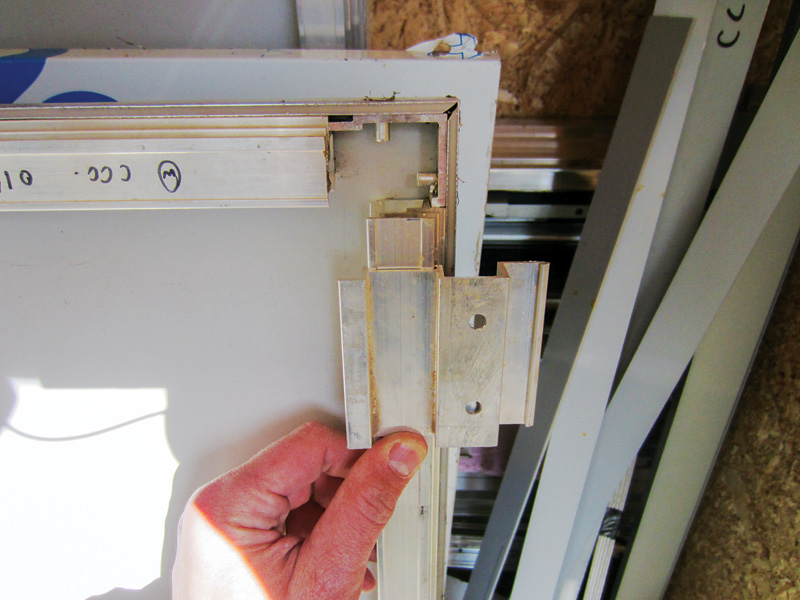
Use a fixed-point and sliding-point diagram in the shop drawings. The fixed point establishes the panel datum; the remaining connections accommodate movement in a defined direction. Show slot direction, clip engagement length, washer or isolator, fastener torque, safety clip if specified, and the clear path for the panel to move. Do not copy a generic slot length into every project. Panel length, alloy, coating, temperature range, joint geometry and the support system all affect the calculation.
PREFA’s current aluminum extrusion guidance gives a useful scale check: it lists 0.024 mm/m/°C for its profiles and shows a 6 m length changing 8.64 mm over a 60 °C difference and 14.40 mm over a 100 °C difference. Those values describe PREFA’s profile system, not a universal MCM rule. Use the selected panel and extrusion data, the project temperature range and the engineer’s movement model for final joint sizing.

Make stiffeners part of the panel design
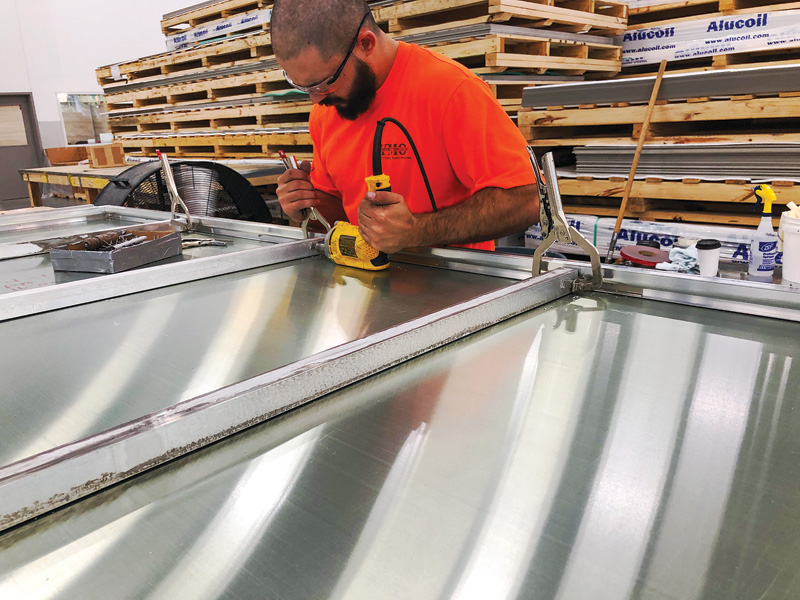
Stiffeners control more than a wind-load number. They limit visual distortion, distribute clip forces and preserve the routed fold during handling. Large flat panels need a regular back layout, reliable bonding or mechanical attachment, and a release record showing the stiffener section, spacing, adhesive or tape system, surface preparation and cure conditions. The MCM article describes aluminum extrusions at regular intervals as a common way to reduce deflection and oil canning, while warning that the exact strategy needs project engineering.
Deep returns and 90-degree corners deserve their own detail. A shallow perimeter extrusion can reinforce a flat face yet leave a deep return flexible. Add a gusset, a deeper section or a smaller module when the return cannot retain its shape. Show the transition from face stiffener to corner stiffener, and inspect the first corner with the intended clip and joint. A corner that looks stiff on a flat sample may rotate after the panel is released from the jig.
Coordinate the subframe with the drainage plane
MCM panels normally sit over a metal subframe that supports the cladding, creates a drainage plane and carries insulation. A thermally broken girt can reduce bridging, but a more flexible girt or a deeper cavity can also increase cantilevering. The 2025 review recommends designing the subframe for the actual panel shape, wind load, clip design and thermal requirements instead of relying on a standard grid.
Show the water path behind the MCM. Keep the panel joint, clip, air-water barrier, insulation, girt and bracket legible in one section. Carry movement joints in the substrate through the subframe where required. Keep the panel free to move without closing the drainage cavity or rubbing a membrane. At windows and parapets, check whether a cantilevered girt is being asked to carry a deep return and a wind load at the same time.
Control oil canning as a visual acceptance issue
Oil canning is a change in relative reflectivity caused by small surface undulations. The older 2023 Metal Architecture background article explains that the waves can be difficult to feel or measure, yet become obvious across a broad reflective wall. Thickness, finish reflectivity, wind, fabrication stress and installation temperature all influence what the eye sees.
Do not promise a perfectly mirror-flat facade by increasing gauge alone. Agree a viewing distance, lighting condition, mock-up size, panel temperature and acceptance language. Decide whether the project accepts minor optical variation, rejects a sharp buckle, or uses a measurable bow limit from the chosen panel system. A first-piece test should include the approved finish, back stiffeners, joint, clips, edge and adjacent glazing. Inspect both a grazing-light view and the normal approach view.


Use a release table before repetitive fabrication
| Release item | What the package should state | Evidence for approval |
|---|---|---|
| Panel build-up | Skin alloy and thickness, core, coating, fire documentation, routed fold and edge closure | Manufacturer data, material schedule and representative corner sample |
| Movement | Temperature range, panel length, fixed point, sliding direction, joint allowance and substrate joint continuity | Movement calculation and marked-up plan/sections |
| Clip engagement | Clip section, slot, engagement length, fastener, isolator and safety retention | Connection detail, pull-out or project engineering evidence, first-piece inspection |
| Stiffening | Extrusion section, spacing, corner reinforcement, adhesive or mechanical fixing and cure control | Back-of-panel drawing, fabrication record and released-panel check |
| Subframe | Bracket, girt, insulation, drainage plane, cantilever, deflection and wind-load assumptions | Facade engineer review and coordinated wall section |
| Visual flatness | Viewing distance, light condition, mock-up size, bow or optical variation criteria | Signed first-piece and mock-up record with photographs |
| Handover | Panel numbers, spare panels, cleaning method, repair limits and replacement sequence | As-built schedule and maintenance instructions |
For Xinmao Metal’s documented advanced shop drawing and value-engineering service, the useful deliverable is a coordinated package that makes the fixed/sliding points, edge returns, clips, finish direction and interface assumptions reviewable. A 1:1 mock-up can then carry the actual panel, stiffener, corner, joint and lighting decision. Xinmao’s general metal service scope and its custom stainless steel screen example show why the base metal and fabrication route should be named. The stainless example is an adjacent visible-panel scope, not evidence of an aluminum MCM product or a substitute for project-specific facade engineering.
Questions to settle with the project team
Can a generic MCM clip detail be reused on every elevation?
No. Panel size, return depth, wind load, temperature range, subframe stiffness and movement direction change the clip and stiffener design. Reuse the design logic only after the selected system is recalculated.
Does a sliding slot solve oil canning?
No. A slot releases movement at one connection. Flatness also depends on panel stress, stiffener layout, edge reinforcement, support deflection, finish reflectivity and installation temperature.
Is the PREFA 10 mm joint recommendation a universal MCM requirement?
No. It is PREFA guidance for its aluminum extrusion profile system. Use the selected MCM supplier’s movement data, the project temperature range and the engineer’s joint calculation.
What should be approved first?
Approve one representative panel, one corner or deep return, the clip and girt, the joint, the finish and the viewing condition together. A flat coupon cannot prove the installed assembly.
Scope note: This article is a material, fabrication and specification guide. Final structural, wind, thermal-movement, fire, drainage, corrosion, sealant, accessibility and product-certification decisions remain with the appointed project professionals and the selected facade and metal contractors.