
Architectural metal insight · Technical deep dive
A practical guide to choosing texture, reflectivity, grade and fabrication details for surfaces that will be touched, cleaned and seen at close range.
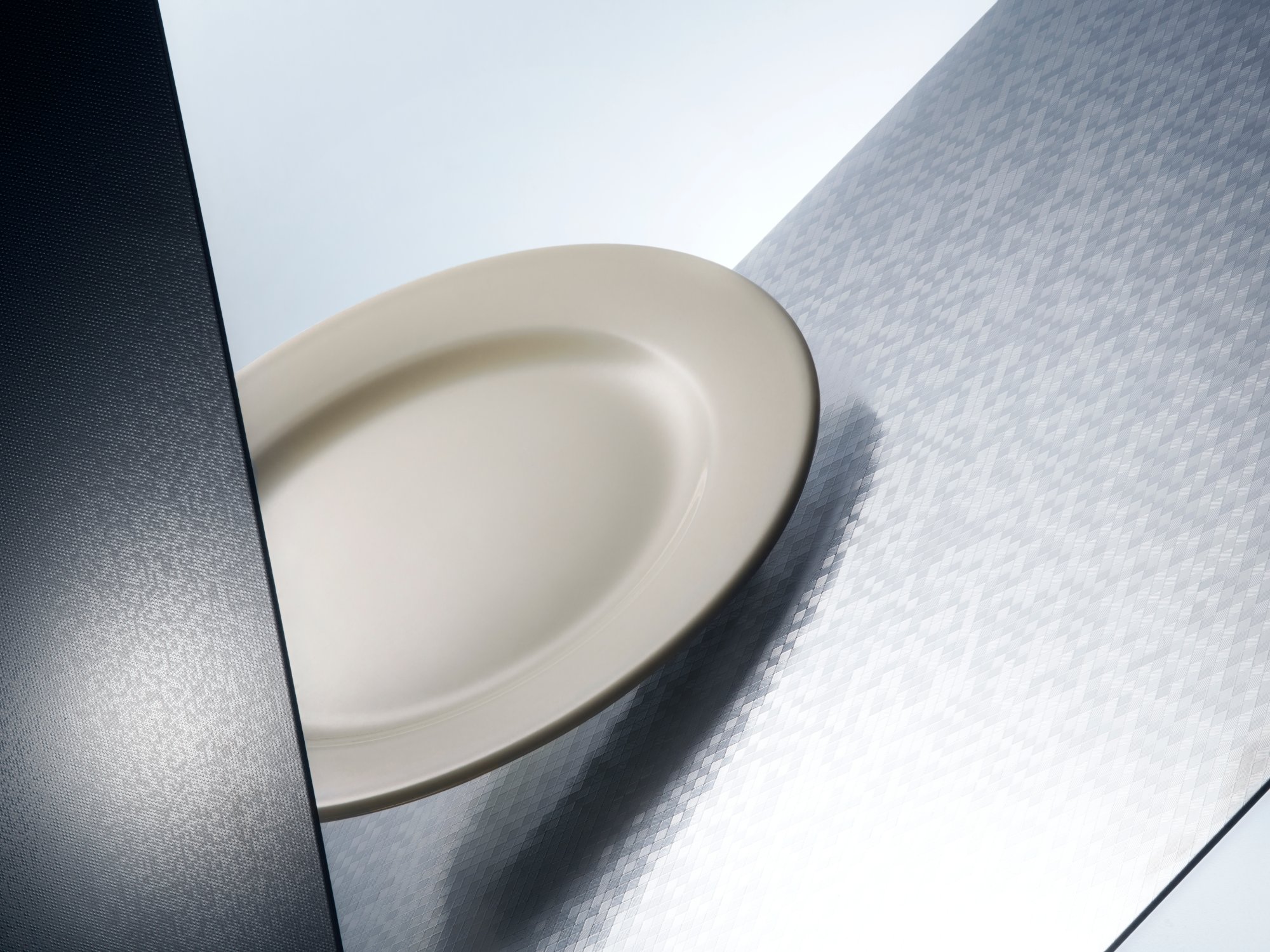
In an elevator lobby, hotel bar, retail entrance or public corridor, a stainless steel finish is exposed to hands, cleaning cycles, reflected light and occasional impact. A finish that looks right in a small sample may behave differently across a large panel or after fabrication. Recent work from stainless steel producers and architectural metal specialists points to a practical approach: choose the surface for the way the space will be used, then coordinate grade, texture, fabrication and maintenance as one specification.
01Why the finish belongs in the brief
Stainless steel is often specified by grade first and appearance second. That order can create problems. The same grade can present very different levels of reflectivity, texture, fingerprint visibility and repairability depending on the finish. BSSA guidance for internal applications identifies fingermarking on wall cladding and lift panels, scratching on bar tops, and the effect of routine cleaning as design considerations. Those are service conditions, not decoration.
Surface finish also affects exterior performance. BSSA notes that smoother finishes generally offer better corrosion resistance and that the more corrosive the environment, the more carefully the finish should be selected. In marine locations, the association warns against treating a standard 240-grit brushed finish as an automatic solution, even when 316 has been selected. A coastal specification therefore needs more than a grade name and the word “brushed.”
02Texture can control how a surface is used
Patterned and textured stainless steel surfaces affect both the visual reading and the maintenance burden of a panel. BSSA describes embossed 2M finishes as useful in high-traffic areas because they can mask scratches and marks. Depending on pattern depth, they may also improve panel stiffness. Lift doors, wall linings and feature panels still need to be checked against the cleaning method and lighting.
Outokumpu’s 2026 article describes a new Easy-to-Clean range built from two superimposed surface patterns. The company says it reduced about 35 concepts to 15 candidates, then selected seven after testing fingerprint visibility and cleanability. Reported applications include elevator interiors and architectural cladding. The useful point for specifiers is the method: the surface was evaluated for contact and cleaning, not only appearance.
Pattern as part of the assembly
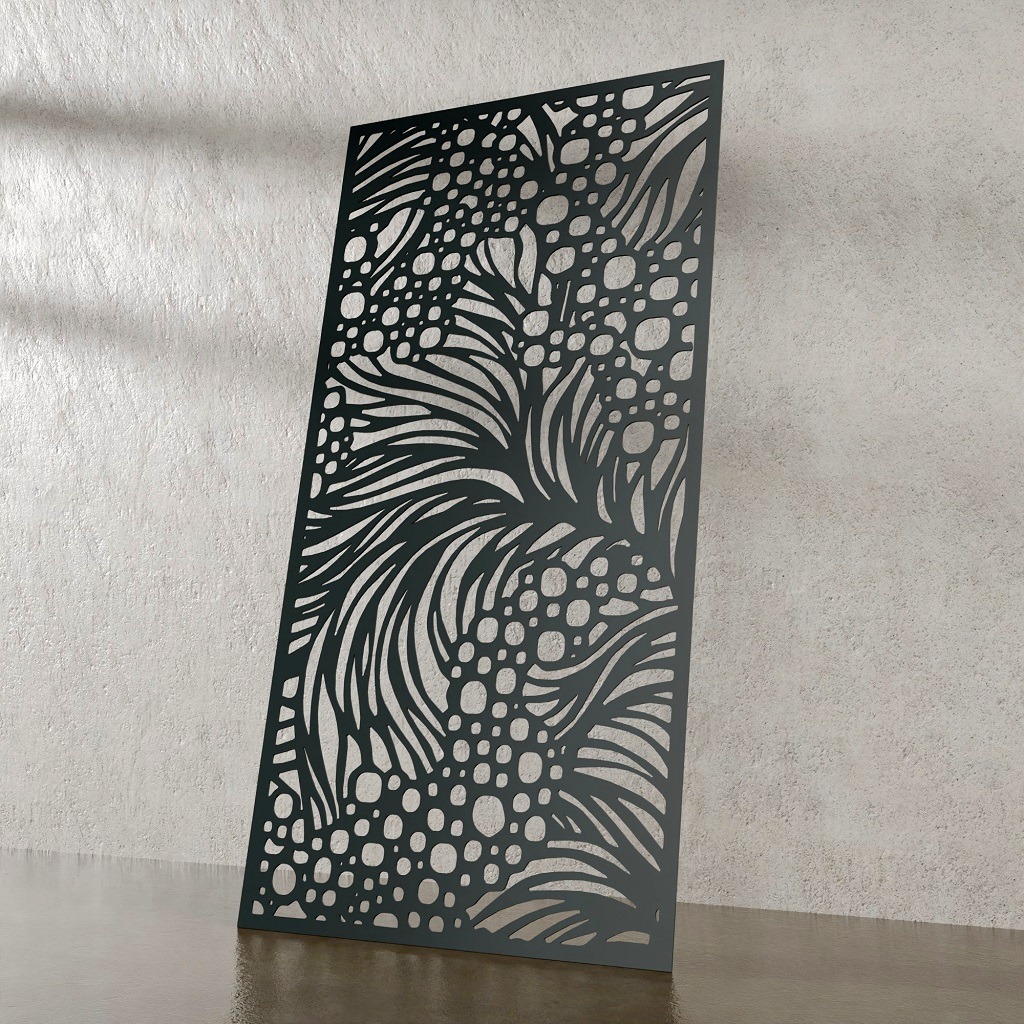
Metal Architecture’s February 2026 coverage of GeoMetal decorative panels shows a related product direction. Laser-cut screens are being used for equipment screens, facades, shade structures and architectural accents, with stainless steel listed alongside aluminum and weathering steel. A perforated panel can filter views and light, but the open area, edge detail, fixing pattern and surface finish still need to be coordinated. Pattern is part of the system, not a substitute for one.
A wider visual vocabulary
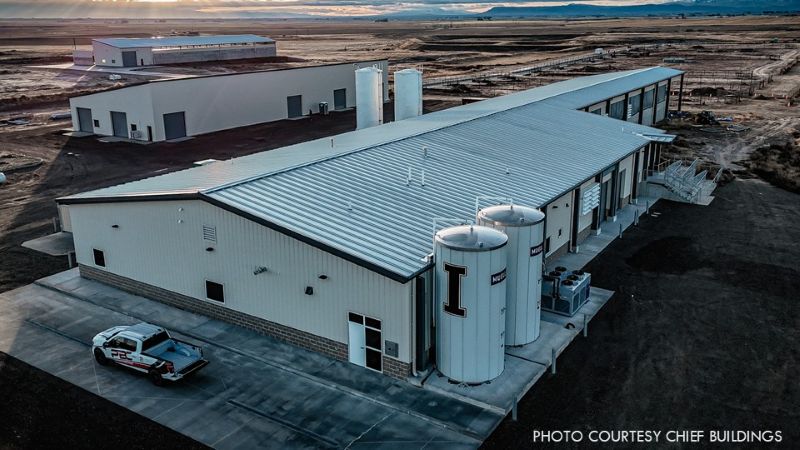
Metal Construction News’s May 2026 coverage of non-residential metal work reflects the wider use of matte, low-gloss, metallic, textured and embossed surfaces. These examples do not prove that a particular stainless steel grade will perform in a particular environment. They do show why a brief should describe the surface, not just call for “metal panels.”
03Fingerprint resistance is a surface-design problem
Highly reflective surfaces show the environment around them, but they also show contact. In a hotel lift, handrail or retail counter, repeated marks can make a finish look neglected between cleaning cycles. A lower-gloss, brushed, satin or patterned surface may be a better fit. BSSA says brushed finishes can reduce fingermarking, while uniform non-directional finishes can be easier to live with where scratching is likely.
That does not make every textured finish maintenance-free. Roughness, open joints and inaccessible returns can collect dirt, while cleaning products can alter appearance. Mild detergents followed by rinsing and drying are normally adequate for many interiors; abrasive materials should be avoided. The cleaning routine belongs in the maintenance plan before approval.
Cleanability is part of the surface specification. It should be discussed beside the lighting, joint detail and access plan, not after the panels arrive.
Outokumpu’s example treats cleanability as an engineered surface property rather than a temporary coating. Its testing focused on fingerprint visibility and removal. That is useful evidence, but it should not be generalized to every textured or colored stainless steel surface. Each finish still needs a sample review and, where the project is sensitive, a mock-up under the actual lighting and cleaning conditions.
04Grade, finish and environment must stay connected
Interior and exterior decisions should not be separated too early. For most ordinary interiors, BSSA identifies 430 and 304 as grades that can be considered, with exceptions such as harsh pool and hydrotherapy settings. Natural color differences between grades can affect a visual match, so grade selection and finish matching need to be discussed together.
Exterior work adds chloride, pollution, moisture traps and maintenance access. IMOA treats environment, steel type, finish, design and maintenance as linked factors. BSSA also advises attention to crevices, iron contamination, incompatible joints and cleaning frequency. A polished surface can still fail if the joint detail holds contaminants or installation introduces carbon-steel contamination.
| Specification question | Why it matters |
|---|---|
| Where will people touch the surface? | Fingerprints, scratches and cleaning frequency may matter more than maximum reflectivity. |
| Is the location coastal, polluted or difficult to access? | Grade, smoothness, drainage, joint design and maintenance intervals need to be reviewed together. |
| Will panels be compared across batches or thicknesses? | Reference samples and a defined finish are more reliable than a general word such as “satin.” |
| How will welds, edges and repairs be treated? | Fabrication can change direction, reflectivity and local corrosion resistance. |
05Colour and PVD need realistic maintenance expectations
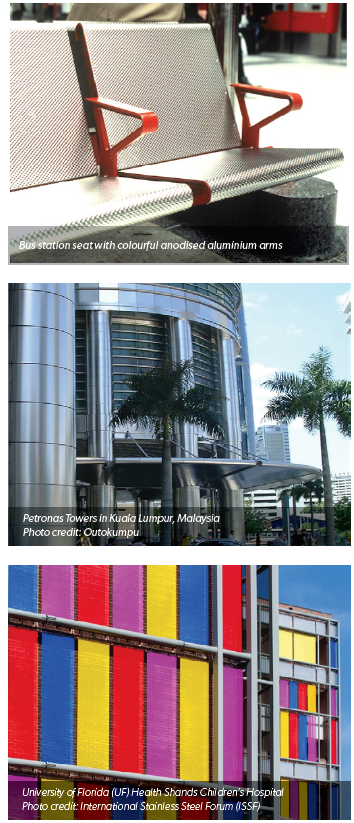
Colored stainless steel allows architects to work with bronze, black, gold, blue and other tones without treating the sheet as ordinary painted metal. ASSDA explains that electrochemical coloring and PVD can be combined with texture. It also cautions that PVD finishes are more abrasion-resistant than some electrochemical systems but are not indestructible. Scratches may be difficult to repair, especially after coloring before fabrication.
INOX-COLOR’s November 2025 architecture and facade update presents colored, textured and homogeneous stainless steel surfaces across facades, elevators, escalators, portals and interiors. For a hotel lobby or elevator interior, ask whether the finish can be matched, protected during installation, cleaned without damage and repaired without an obvious patch. A sample and maintenance note are more useful than a color name alone.

06Fabrication can change the appearance you approved
A finish is not complete when the sheet arrives. Cutting, bending, grooving, welding, grinding, polishing and handling can alter the surface. ASSDA describes No. 4 as a directional finish that can be refinished to blend weld zones more easily than 2B or BA. It also warns that appearance is difficult to define with roughness or gloss alone. For critical work, a large sample viewed from different angles is more dependable than one numerical value.
Edges and joints deserve the same attention. A panel may look consistent in the center and still fail at a return, reveal or welded corner. Protective films can preserve a mill finish during fabrication and installation, but they are not a substitute for clean storage, suitable tools and an agreed repair procedure. The specification should identify who approves the finished mock-up and what happens when a panel does not match it.
07What architects and contractors should put in the specification
08Architectural metal perspective
The current Xinmao Metal catalog includes stainless steel decorative screen panels, perforated and mesh ceiling panels, and elevator lobby cladding. These products sit in the parts of a building where surface decisions are visible at close range. The design lesson is straightforward: a screen, ceiling or lobby panel should be developed as a complete assembly. Finish, pattern, panel size, edge treatment, fixing and maintenance access need to support the same architectural idea.
For projects considering a stainless steel decorative screen panel, a perforated or mesh ceiling panel, or elevator lobby cladding, the finish should be reviewed at the same time as the pattern and installation detail. That is where a visual choice becomes a workable specification.
09Conclusion
Architectural stainless steel finishes are being asked to do more than create a visual effect. They manage reflection, contact, cleaning, surface variation and the way a panel meets its surroundings. New low-maintenance surface developments add useful options, while established technical guidance continues to point back to the same discipline: select the grade, finish, detail and maintenance plan together.
10Technical references
- Outokumpu, “More to feel, less to clean: Outokumpu's new stain-resilient stainless steel surfaces,” 2026.
- British Stainless Steel Association, “Selection of stainless steels for building external applications.”
- British Stainless Steel Association, “Selection of stainless steels for buildings: internal applications.”
- ASSDA, “FAQ 12: Coloured and Patterned Stainless Steel.”
- ASSDA, “No 4: The Workhorse Finish.”
- INOX-COLOR, “Special page for architecture and facades,” November 3, 2025.
- Metal Architecture, “Decorative Metal Enhances Screening,” February 6, 2026.
- Metal Construction News, “This is not your grandpa’s metal building,” May 2026.