
Metal industry news · Surface design
Colored stainless steel offers more than a new palette. The process changes how a surface is viewed, fabricated, protected and maintained.

Color is often the first thing people notice about a decorative stainless steel surface. It is not the first thing a specification should settle. The visible result depends on the base material, surface texture, coloring route, viewing angle, fabrication sequence, lighting and cleaning method. A copper-toned panel that looks uniform in a small sample may show a different character across a large facade or after bending. The better brief treats color as one part of a surface system.
01Why a color name is not a specification
“Bronze,” “black,” “gold” and “blue” describe a visual intention, not a complete material choice. Two surfaces with the same color label can differ in gloss, texture, directionality and reflectivity. They may also react differently when cut, bent, drilled, welded or cleaned.
ASSDA’s technical guidance separates electrochemical coloring, PVD and mechanically patterned stainless steel. That distinction matters because the colored layer or surface relief becomes part of the finished product. If the process is not named, a later substitution can deliver a similar hue with a different scratch response or repair method.
02Three surface routes, three different conversations
Electrochemical coloring grows a controlled oxide film on the stainless surface. ASSDA notes that the color comes from the interaction of light with the film and the metal below, so the appearance can change slightly with viewing angle. The process requires a uniform film and is generally carried out at the factory.
PVD deposits a thin coating in a vacuum process. ASSDA describes PVD as more abrasion-resistant than some electrochemical systems, while also making clear that it is not indestructible. The source material influences the color, and the coated surface must be clean enough for the layer to adhere properly.
Patterning works on a different principle. Embossed or textured profiles change the way light is scattered and can make scratches less continuous or less obvious. They can also affect cleanability and, through cold work, influence stiffness. The process is part of the design decision.
| Surface route | What to review | Typical specification question |
|---|---|---|
| Electrochemical coloring | Viewing angle, film uniformity, batch tint and repair limits. | Will adjacent panels be approved under the same light and orientation? |
| PVD | Coating adhesion, abrasion exposure, fabrication order and replacement strategy. | Which surfaces will be touched, and how will a damaged panel be replaced? |
| Patterned or embossed finish | Relief depth, glare, dirt retention, cleaning access and panel stiffness. | Does the pattern support the maintenance plan as well as the visual idea? |
03Color consistency lives at the scale of the project
ASSDA records two practical limits of colored stainless steel. Uniform film thickness is important, and small tint differences can occur between batches. The surface can also appear to shift with the viewing angle when the color is produced by interference in an oxide film. Neither issue is a reason to avoid colored stainless steel. Both are reasons to approve the material at a useful scale.
For a facade, elevator interior or feature wall, the sample should show more than the color. It should show the texture, direction, edge condition and relationship to adjacent panels. Review it beside the stone, glass, timber or upholstery that will sit next to the metal. A finish that works in isolation can become too bright or too dark in the assembled interior.
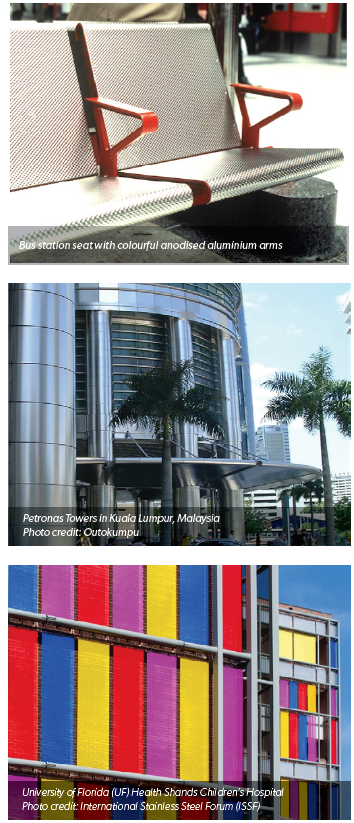

Approve the surface as it will be seen: at full panel scale, under project lighting, beside the materials that will frame it.
04Pattern can soften reflection and hide service marks
Patterned stainless steel is not simply a decorative overlay. ASSDA describes embossed and profiled finishes in high-wear locations such as airport baggage areas and hospital corridors. A through-sheet profile can increase stiffness, while scratches may be less apparent when they do not run continuously across the surface.
The trade-off is maintenance. A deep or open texture can retain dirt, and rougher abraded surfaces may not offer the same corrosion behavior as smoother mill finishes. Cleaning tools, drainage, joints and access should be reviewed with the pattern rather than after it.
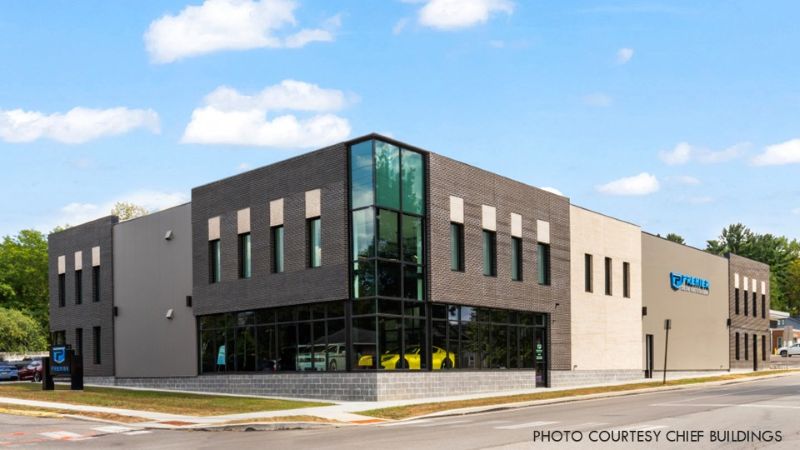
Broader finish context
Metal Construction News’s May 2026 feature describes a wider architectural palette that includes matte and low-gloss finishes, metallic coatings, weathered-steel effects, woodgrain, textured and embossed surfaces. These examples are not performance evidence for a specific stainless steel surface. They show why architects increasingly need to specify how a panel should read, not just what material family it belongs to.
05Fabrication order can protect or damage the finish
Colored layers and coatings change the usual fabrication conversation. ASSDA explains that welding locally destroys an electrochemically colored film, so mechanical fixing may be required for some colored components. PVD also depends on a clean surface and a sound coating bond. The fabrication sequence should be agreed before the material is ordered.
Ask whether sheets will be colored before cutting, formed before coating, or assembled with visible mechanical fixings. Protect the face during handling and installation. Keep a repair sample in the project file, because a replacement panel may be easier to approve than a field repair that changes the color or gloss.
Edges deserve their own review. A raw cut edge, folded return or drilled opening can expose a different visual line from the field of the panel. This is especially noticeable on dark, reflective or strongly directional surfaces.
06Exterior exposure changes the maintenance question
INOX-COLOR’s November 2025 architecture update presents colored, textured and homogeneous stainless steel surfaces across facades, elevators, escalators, portals and interiors. That range of applications is useful context, but it does not make every finish suitable for every site. The environment still controls the material decision.
BSSA advises that smoother finishes generally offer better corrosion resistance and that marine or polluted locations require more careful selection. It also identifies crevices, iron contamination, joint design, cleaning access and finish smoothness as connected issues. A colored surface may be visually successful and still need a different grade, detail or cleaning interval than an interior feature panel.
07What to include in the purchase specification
08Architectural metal perspective
Colored stainless steel works best when the color is tied to an assembly. On a decorative screen, pattern and openness may matter as much as hue. On an elevator lobby panel, fingerprints, edge returns and replacement access may matter more. On a facade, grade, drainage and cleaning access set the limits.
For projects considering bronze-tone stainless steel elevator lobby cladding, a custom stainless steel decorative screen panel, or perforated and mesh ceiling panels, the finish should be reviewed beside the pattern, panel size and installation detail. That is how a color choice becomes a buildable surface.
09Conclusion
Decorative stainless steel gives architecture a wide range of color and texture, but the attractive sample is only the beginning. Process, viewing angle, batch control, fabrication, cleaning and repair determine whether the surface continues to work after installation. A clear brief keeps those decisions together.
10Technical references
- ASSDA, “FAQ 12: Coloured and Patterned Stainless Steel.”
- INOX-COLOR, “Special page for architecture and facades,” November 3, 2025.
- British Stainless Steel Association, “Selection of stainless steels for building external applications.”
- British Stainless Steel Association, “Selection of stainless steels for buildings: internal applications.”
- Metal Construction News, “This is not your grandpa’s metal building,” May 20, 2026.
- Zahner, “Surfaces Datasheet and Order Form,” October 14, 2025.