
A coastal handrail is a life-safety interface, a corrosion-exposed surface and a future maintenance responsibility. Its material, profile, drainage, finish, fixing and handover information need to be designed as one system.

In a public space, a handrail is touched, leaned against, cleaned, inspected and occasionally impacted every day. In a coastal setting it is also exposed to airborne chlorides, wet-dry cycling, salt-laden wind and, in some locations, direct splash. That combination makes a railing a demanding architectural metal package rather than a simple tube-and-bracket detail.
The most useful question is not “Which stainless steel grade looks right?” It is “What must the complete railing system continue to do after years of contact, weather, cleaning and repair?” The answer connects the governing safety code, exposure map, profile, section availability, water path, finish, fabrication controls and maintenance plan.
Why the public realm changes the specification
The first obligation is safe, predictable contact. A handrail needs a continuous graspable line, a durable tactile surface and geometry that works with the guard, infill, stairs, ramps and landings. People also push and lean on public railings, so posts, brackets, anchors and the substrate must transfer those actions without excessive movement.
BSSA’s guidance points to Approved Document K and load / deflection references including BS 6399-1 and BS 6180 in the UK context. It also notes that tubing sizes vary by supplier. For an international project, identify the governing local code and engineer, then confirm the actual section, wall thickness, radius, spacing, guard geometry and deflection criteria with the fabricator.
Finish is part of the safety interface. Smooth, embossed, textured or reflective surfaces have different tactile, cleaning and visual behaviours. Approve a sample that includes the hand-contact profile, joints, brackets and adjacent infill—not only a flat coupon.
A current coastal project shows the coordination burden
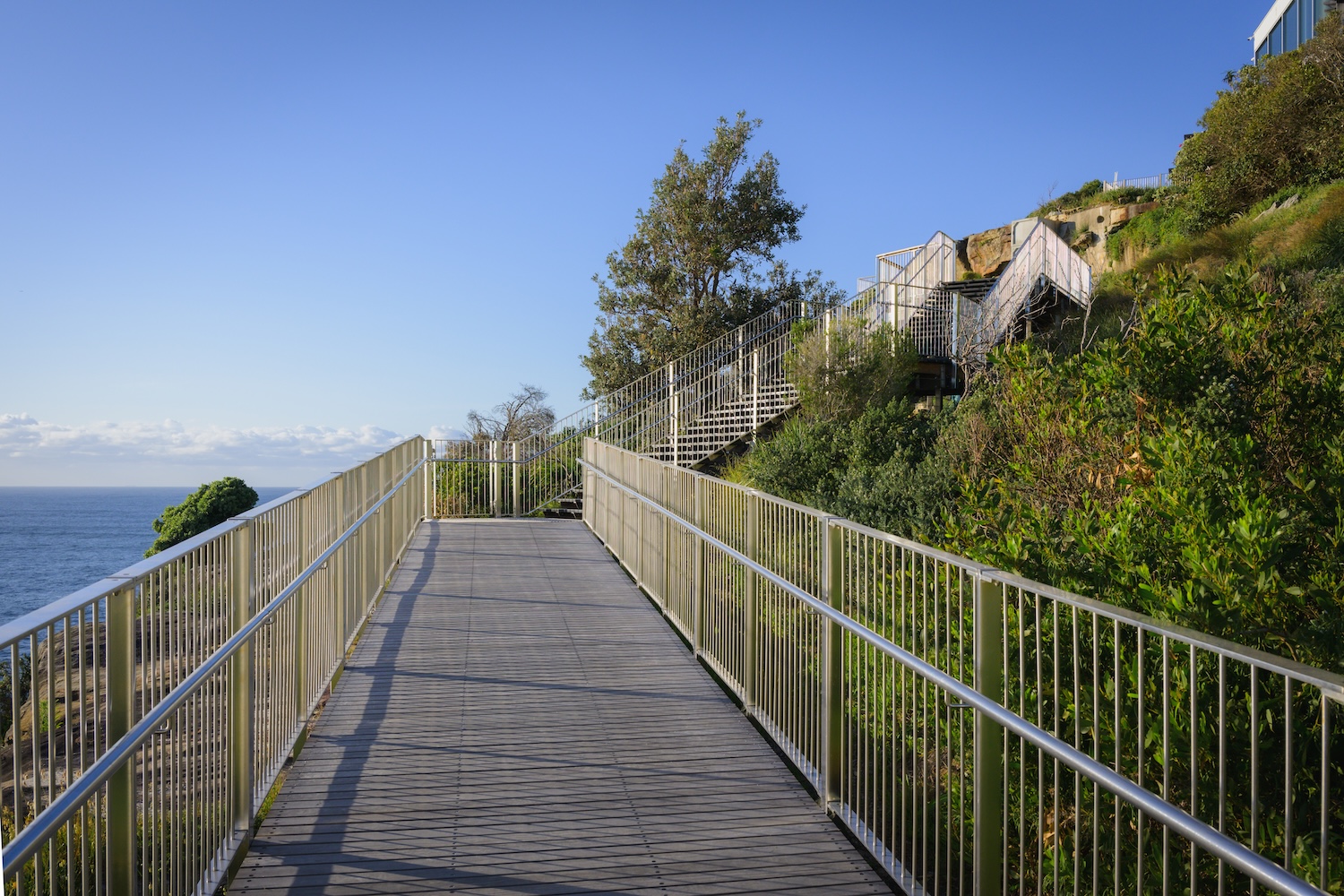
ASSDA’s Vaucluse Clifftop Walkway case study, updated in March 2026, reports approximately 65 tonnes of stainless components in a harsh Sydney marine setting. Its scope included more than 1,000 metres of balustrades, posts and continuous handrails alongside fencing, stairs and hardware. Grade 316 was specified throughout that project, but this fact is not a universal rule for every coastline.
The deeper lesson is the delivery method. The boardwalk was modelled in 3D, divided into prefabricated modules and survey-controlled before installation. Laser cutting, inspection and test plans, qualified weld procedures, independent testing, material certificates and early prototype samples linked approval to production.
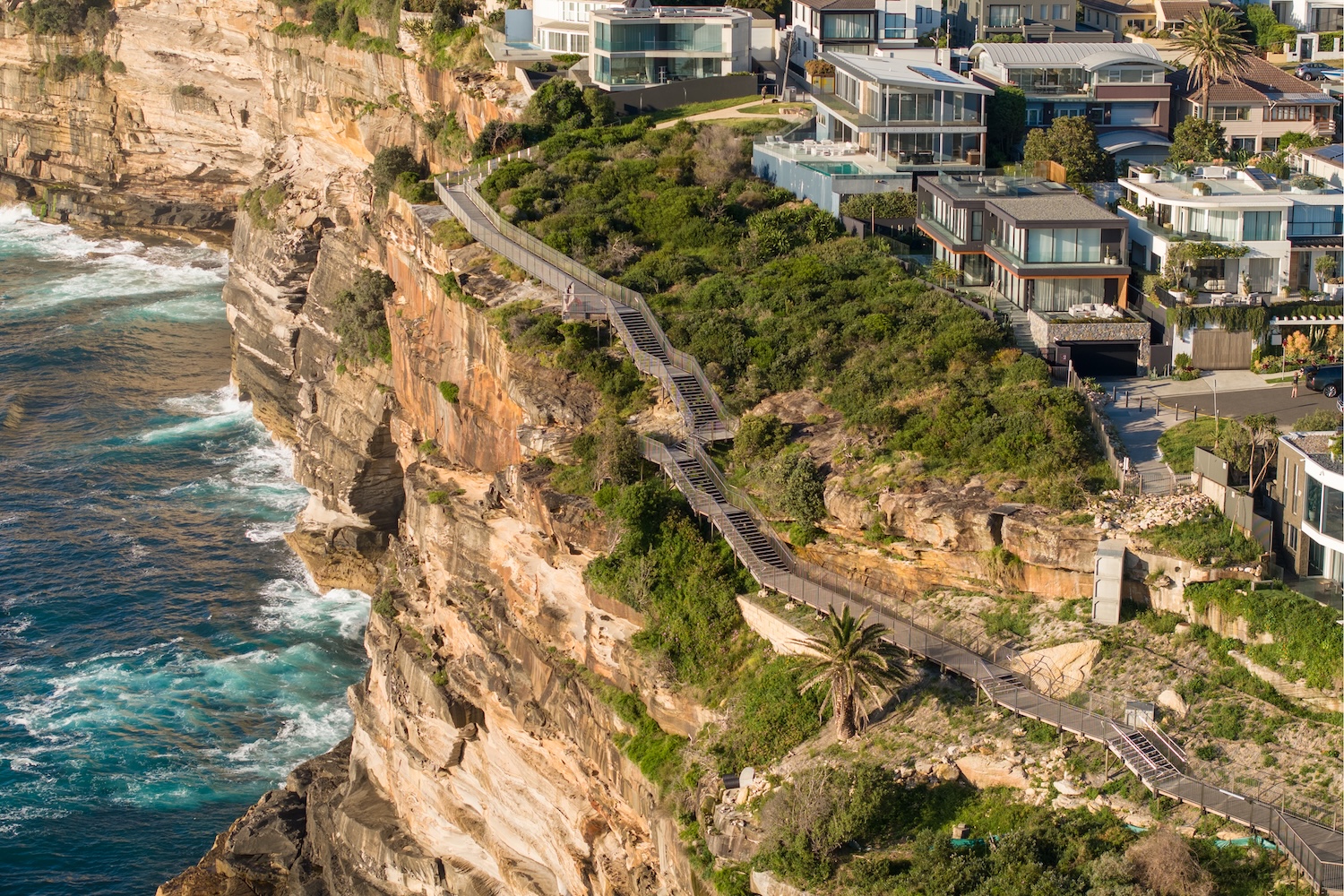
On a real site, the material decision is inseparable from survey control, fabrication evidence, an approval sample and the installation sequence.
Coastal exposure is a map, not a label
“Coastal” is too broad to be a complete material description. A sheltered elevation, sea-facing promenade, splash-prone pier and road bridge exposed to deicing salt do not impose the same wetting, salt concentration, cleaning or access conditions.
worldstainless explains that chloride-bearing water and deicing salt can create aggressive conditions, while pitting and crevice attack are affected by retained electrolyte, geometry and surface condition. Distinguish sheltered exterior, airborne salt, rain-washed exterior, direct splash / brackish water and deicing runoff. Mark where water can sit, cleaning is difficult or safe access is limited.
An evergreen IMOA pier-railing case makes the distinction concrete. In Queens West Park, glass bead-blasted Type 316L performed well outside the splash zone, while sections repeatedly hit by brackish water showed staining within months. A 15-month comparison of 316L, 2003 and 2205 samples reported the strongest result for 2205 in that case.
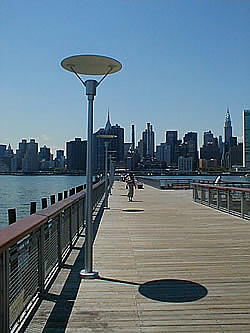
The conclusion is deliberately qualified. 316L may suit many exterior environments; duplex stainless steel may be investigated where strength and localized-corrosion resistance matter; other grades may suit other conditions. Exposure, code, section form, finish, fabrication route and maintenance expectation must govern. Neither “coastal” nor “316” is a substitute for assessment.
Details that keep water moving
Drainage is one of the most transferable lessons from Vaucluse. The ASSDA report records capped tube ends, self-draining features and careful orientation of square hollow-section posts. Every hollow member, bracket pocket and horizontal return needs an intentional water path that remains open after fabrication and sealant work.
Shop drawings should show where water enters and exits, how a cap is fixed, whether a seal is structural or weathering, and how the detail is inspected. Avoid blind bracket pockets, unsealed ends and un-washable ledges. Check thermal and substrate movement so a rigid connection does not defeat drainage.
Surface finish must be coordinated with geometry. Brushed, bead-blasted, pickled, polished and coloured surfaces behave differently visually and during cleaning. The IMOA case shows why one splash-environment comparison is not a universal ranking. Approve the actual profile and joint, texture continuity and a repair method that will not create visible patchwork.
Prefabrication turns repetition into quality control
Long handrails are repetitive, but supporting conditions rarely are. Survey error, slope changes, expansion joints, infill tolerances, stairs and substrates accumulate along a public route. Prefabrication does not remove the variables; it exposes them earlier in drawings and prototypes.
Outokumpu’s Finken Bridge case describes nearly 290 metres and 52 tonnes of Forta DX 2205 duplex stainless steel railings in Helsinki. The workflow moved from BIM modelling through engineering, material planning, fabrication and installation, with laser cutting, bending, forming, welding, glass bead blasting and pickling. Customised sheet lengths supported material efficiency. It is a delivery example, not a prescription for every coastal railing.

A meaningful prototype should include a representative post, bracket, cap, joint, infill interface, weld, finish transition and substrate connection—not just a short handrail. Test sightline, touch, glare, drainage, cleanability, access and installation. Use the approved sample as the production and handover reference.
Specification/Fabrication Considerations
| Decision | Record in the package | Risk controlled |
|---|---|---|
| Exposure | Airborne salt, splash, brackish water, deicing runoff, shelter, access and wet-dry cycling | Under-specification and unrealistic maintenance |
| Safety and structure | Governing code, continuity, guard geometry, loads, deflection, post spacing, anchors and substrate | Unsafe movement, non-compliance and late changes |
| Material | Stainless steel family / grade, product form, thickness, section availability, certificates and traceability | Copied grades or unavailable sections |
| Geometry and drainage | Profile, bend radius, joint, cap, drain route, bracket pocket, movement and inspection access | Standing water, crevices, rework and hidden corrosion |
| Finish | Approved full-profile sample, texture or grain direction, colour / reflectivity, protection and cleaning method | Inconsistent appearance, scratches, glare and poor touch-up |
| Fabrication and QA | Model revision, nesting, forming, weld controls, surface treatment, dimensional checks, packaging and inspection | Field adjustment, contamination, distortion and untraceable defects |
| Handover | As-built rail map, sample reference, spares, cleaning products, frequency, access method and responsible owner | A durable railing that cannot be maintained consistently |
Architects and Contractors Should Consider
- Map exposure before selecting the grade. Mark splash, runoff, shade, retained water and deicing contamination; distance from the sea is not enough.
- Separate handrail safety from guard-infill and anchorage design. Have the local code and engineer confirm loads, deflection, geometry and substrate capacity.
- Confirm the actual section, thickness, bend radius, bracket spacing and procurement route before freezing the visual language.
- Give every tube, post and bracket pocket a water path. Show caps, drains, sealants and movement in the shop drawings.
- Approve a full-scale sample with hand-contact profile, joint, cap, bracket, infill, substrate connection and finish.
- Protect the approved surface through cutting, forming, transport, installation and cleaning, with named inspection points.
- Hand over the owner, cleaning method, interval, access equipment and replacement reference. “Low maintenance” still requires a reachable, documented surface.
When the railing is released as a maintainable public asset
For Xinmao Metal, the useful question is not simply whether a rail can be fabricated. It is whether the approved rail can be released as a repeatable package whose safety, material, finish, drainage, fixing and maintenance information stay aligned from drawing to handover. Xinmao Metal’s public product overview lists stainless steel handrails and stair railing, while its Climate-Resilient Material Solutions page identifies marine-grade balustrades, handrails and staircase systems.
The association should stay practical. A brief can connect Advanced Shop Drawing & Value Engineering with section, drainage, fixing and tolerance decisions; use 1:1 Mock-Up & Prototyping to approve the tactile standard; coordinate End-to-End Bespoke Fabrication with inspection; and use Site Measurement & Installation Guidance to close the survey-to-installation gap. Grade, thickness, finish, certification, structure and maintenance still require project-specific confirmation.
Conclusion
Coastal stainless steel handrails succeed when the public user, marine environment and fabrication process are considered together. The pattern is consistent: map exposure, apply safety criteria, avoid automatic grade assumptions, keep water moving, approve the full profile, prefabricate where useful and hand over a workable maintenance plan.
The result is more than a clean-looking railing: it is a safer, inspectable and maintainable public asset whose material and detailing decisions remain explainable years later.