
Project & Engineering
A moving canopy changes the handover conversation. The visible folded surface is only one part of the work; the delivery package also has to control interfaces, motion, access and testing.
A canopy that moves needs a delivery plan that moves with it
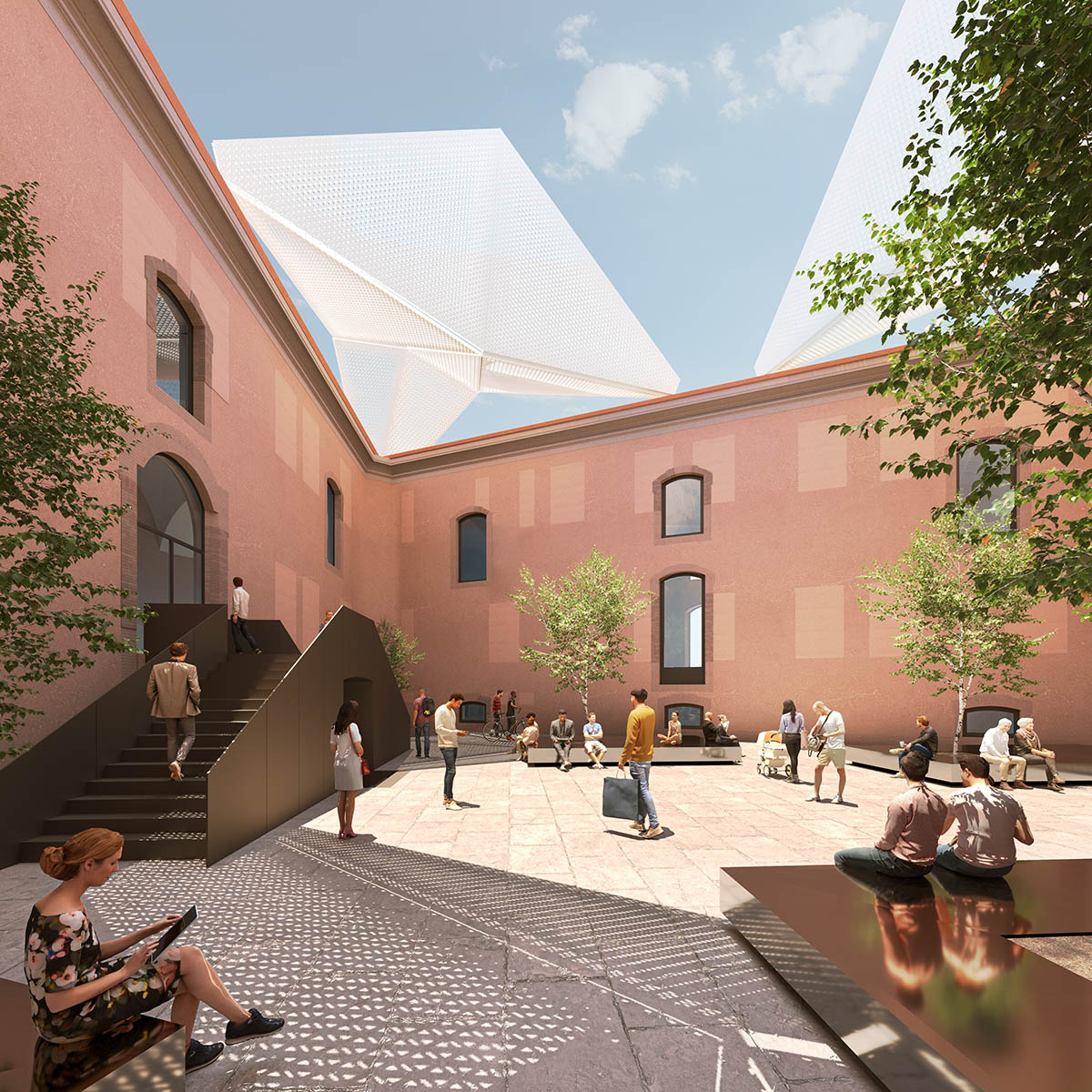
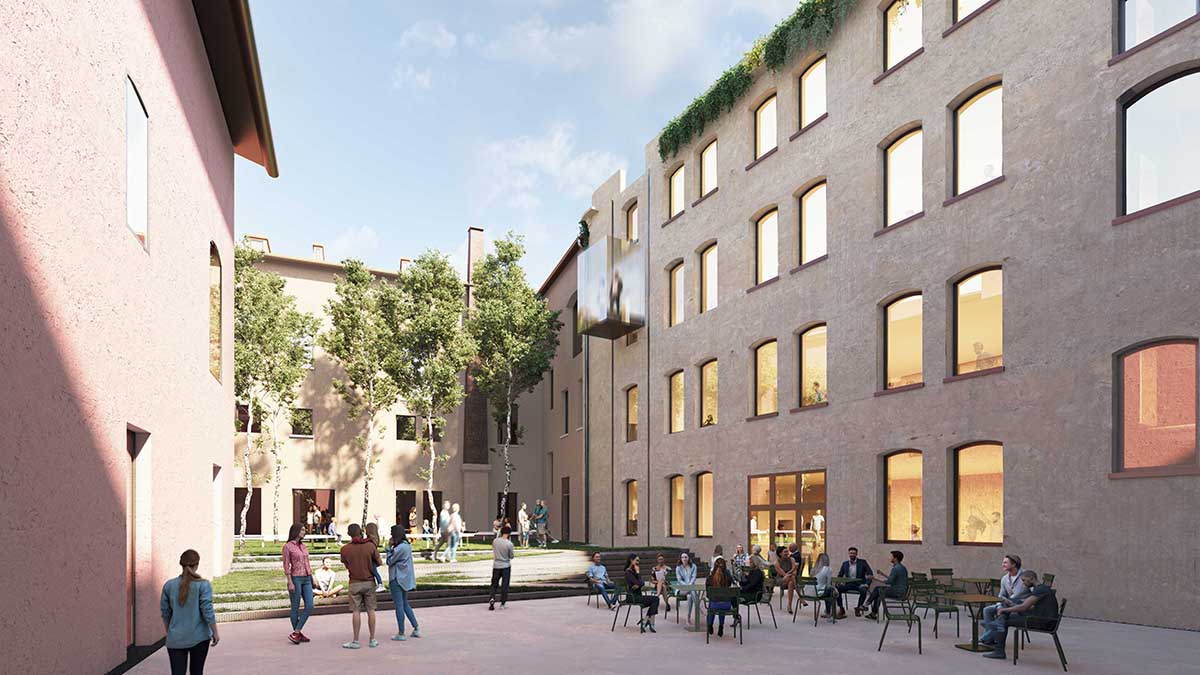
The future canopy for AGO Modena Fabbriche Culturali offers a useful project reference. CRA-Carlo Ratti Associati describes a roof for a triangular historic courtyard that can shift between open-air and covered configurations. The team’s recent public model is not the completed roof. It is a seven-metre model that reproduces the intended mechanism through three independently operated sections. CRA says it was digitally fabricated and pre-assembled before installation, using Corten steel and stainless steel. Those published facts point to a practical lesson for custom architectural metal teams: the visual geometry, moving system and site interfaces need to be coordinated as one package.
Start shop drawings with movement, not only elevations
For a fixed screen, a plan, elevation, section and connection set may describe the fabrication route well. For a moving roof, the drawings should add a position schedule. Show the fully open and fully closed states, then the positions that create the largest offsets at edges, links and drainage paths. A point that clears in a static section can conflict halfway through travel.
That schedule should be shared early with structural, electrical, controls, roofing and restoration teams. The metal fabricator needs agreed datums for support steel, bearing centers, panel build-up and the envelope of every moving edge. The controls specialist needs an allowance for cable routing and service loops. The architect needs to decide which joint lines are permitted to widen or visually change as the mechanism operates. Trying to settle these items after finish samples are approved is expensive and usually disruptive.
At AGO, CRA identifies a kinetic-roof structure consultant, a separate team for structural, mechanical and electrical engineering, plus fire, acoustic and lighting consultants. That credit list does not describe their individual scopes, but it does show the number of disciplines around a public moving roof. The interface register needs an owner for each crossing: steel to mechanism, mechanism to cladding, cladding to roof build-up, and roof to heritage fabric.
Build a representative moving mock-up before the finish decision is locked
A material sample tells a client whether a metal surface has the right colour and texture. It cannot prove whether an articulated assembly will drain, align or remain serviceable. The more useful mock-up is a representative moving bay. It should include a real support condition, the panel edge return, the joint cover or gasket, the adjacent weathering layer and the hardware that carries the expected load.
Run that mock-up through repeated cycles and inspect it in the positions where water, debris and visual misalignment are most likely to collect. Record the actual panel gaps, torque settings, fastener access and the method for replacing a damaged piece. If the final surface has a directional polish, perforation or folded pattern, the sample also needs to establish panel orientation and marking rules. A beautiful folded pattern can become visibly uneven if parts are installed in a different rotational order.
Pre-assembly is a quality gate, not a photo opportunity
CRA’s note that the AGO model was pre-assembled before site installation is worth taking seriously. Pre-assembly gives the team a controlled place to confirm part identification, assembly sequence and basic motion before access equipment, weather and follow-on trades complicate the work. For a custom canopy, it should also confirm packing breaks, lift points and the exact order in which temporary braces are removed.
Questions to close before release for fabrication
- Which coordinate system controls supports, pivots and perimeter interfaces?
- What is the complete travel envelope, including temporary installation positions?
- Which joint gaps may change in operation, and how will water and debris leave those joints?
- Can each actuator, bearing, fastener and finish-sensitive panel be inspected and replaced without removing unrelated work?
- What test sequence proves alignment, safe operation and handover readiness?
Handover needs operating evidence
A kinetic canopy needs a readable operating record alongside finish records and warranties. The handover file should identify normal positions, inspection intervals, isolation points, alarms and the process for returning the system to service after maintenance. The owner should receive as-built drawings that match final settings, not merely the issue-for-construction set.
The AGO project is a reminder that adaptable architecture is not delivered by motion alone. The durable result comes from treating the metal surface, the mechanism and the site installation as connected work. When that coordination begins in the shop-drawing stage, the finished canopy has a better chance of operating as deliberately as it looks.
Project references
CRA-Carlo Ratti Associati: An Origami Roof Opens Over Modena (2026), for the public model, material description, pre-assembly and project credits.
Fondazione AGO: opening announcement (24 July 2026), for the current project announcement and future kinetic canopy.
designboom: kinetic-canopy preview (August 2026), for independent project coverage.